
Main Courses
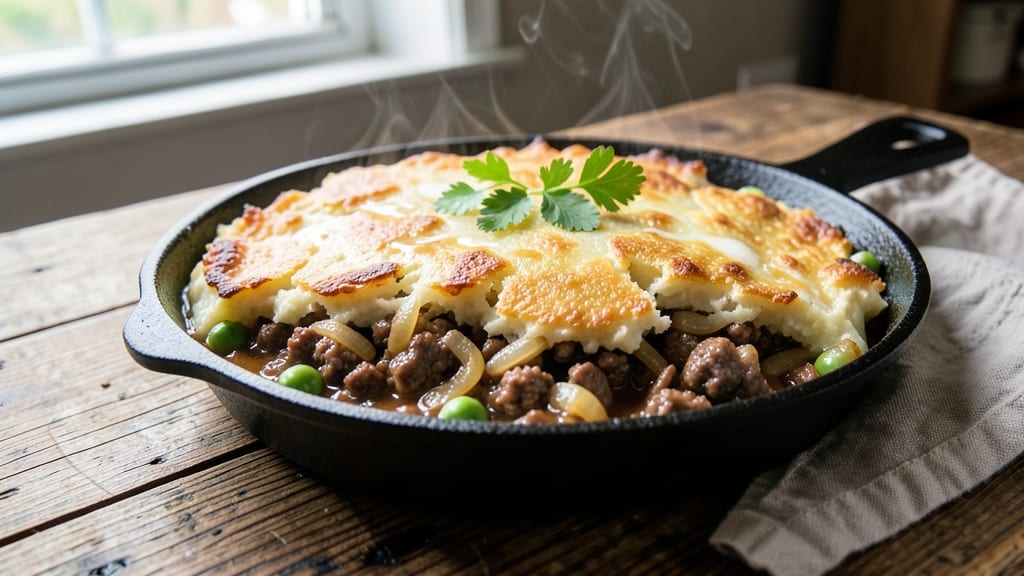
This traditional Irish cottage pie recipe brings hearty comfort to your table with its signature crispy potato topping and rich beef filling—just like my grandmother used to make.
The secret lies in slow-cooked ground beef with onions and peas, topped with perfectly seasoned mashed potatoes that bake into a golden, crackling crust. Every bite delivers the warmth of Irish home cooking, where simplicity meets deep, satisfying flavors.
The beauty of this dish is in its layers—tender beef simmered in gravy, sweet peas adding brightness, and the potato crown that transforms a simple meal into something extraordinary. While traditional recipes rely on basic pantry staples, modern twists might include herbs or a splash of stout for depth.
The key is patience: letting the filling cook low and slow while the potato topping develops that irresistible crisp.
What you’ll end up with is a steaming plate of cottage pie that smells like home—golden on top, rich and savory inside, with peas peeking through the tender beef.
It’s the kind of dish that feels like a hug on a cold evening, perfect for family dinners or gatherings where hearty meals are the star. The best part? Leftovers taste even better the next day, reheated until the crust is crispy once more.
Serve with a simple green salad or steamed vegetables to balance the richness, and don’t forget a cold pint of Guinness if you’re celebrating Irish heritage.
This recipe stays true to its roots while letting you add your own touch—whether it’s a pinch of smoked paprika or a sprinkle of fresh thyme. Let’s get cooking!
Ingredients for traditional irish cottage pie
Simple pantry staples that transform into a comforting Irish classic.
| Ingredient | Amount | Notes |
|---|---|---|
| Ground Beef 🥩 | 1 ½ lb | Lean or 80/20 for flavor, finely chopped |
| Yellow Onions 🧅 | 1 whole | Medium, diced small |
| Fresh Peas 🌽 | 1 cup | Frozen works too (thaw first) |
| Russet Potatoes 🥔 | 2 lb | Starchy, peeled and boiled |
| Beef Broth 💧 | 1 ½ cups | Low-sodium preferred |
| Whole Milk 🥛 | ½ cup | Full-fat for creaminess |
| Unsalted Butter 🧈 | ½ cup | Cold, cubed for mashed potatoes |
| Salt 🧂 | 1 ½ tsp | Kosher or sea salt |
| Black Pepper 🌶️ | ½ tsp | Freshly ground preferred |
| Garlic Cloves 🧄 | 3 cloves | Minced for filling |
| All-Purpose Flour 🌾 | 1 tbsp | For thickening gravy |
| Dried Thyme 🌿 | ½ tsp | Or 1 tsp fresh chopped |
| Guinness Stout 🍺 | ½ cup | Optional for depth (omit if non-alcoholic) |
The beef is the heart of this pie—80/20 lean-to-fat ratio gives the best flavor, but lean works if you prefer. I grab mine from the butcher counter when possible (it's pre-ground and cheaper), but the pre-packaged stuff at Kroger or Tesco is fine too. For the potatoes, Russets or Yukon Golds are ideal—they mash smoothly and hold their shape when baked. If you're feeling fancy, add a splash of Guinness to the filling (just half a cup), but it's not required. The peas? Fresh are lovely, but frozen peas from the store freezer section are a game-changer—they're cheaper, last longer, and work just as well once thawed.
No beef broth? Chicken broth with a splash of Worcestershire sauce works in a pinch, but beef is ideal. The thyme can be swapped for dried rosemary at half the amount, though thyme has that classic Irish cottage pie flavor. Short on butter for the mash? Olive oil or more milk keeps it creamy (just add a splash of milk to compensate). The Guinness? If you don't have it, dark beer or even extra beef broth adds depth. Pro tip: Don't skip the flour for thickening—it's what gives that rich gravy texture. And if your potatoes are watery after boiling, drain them really well before mashing.
This pie reheats beautifully—cover with foil and bake at 375°F for 20 minutes to revive that crispy top. Leftovers keep for 4-5 days in the fridge, but honestly, they taste even better the next day. For freezing, wrap tightly in foil and thaw overnight in the fridge before reheating. The filling freezes well, but the potato topping can get soggy, so I usually make it fresh when serving to guests. Store the filling separately if you're prepping ahead—just assemble and bake when ready.
Why You'll Love This Recipe
- One-Pot Magic: I swear by this recipe for lazy nights—the beef and onions simmer in the same pot where the potatoes later bake, so cleanup is nonexistent. Just one dish, one spatula, and zero stress.
- Creamy Crispy Contrast: That golden potato top with the tender, herby beef underneath? It’s the kind of texture combo that makes you close your eyes mid-bite. The peas add a bright pop, but honestly, even my picky husband asks for seconds.
- Budget-Friendly Feast: Ground beef and potatoes stretch this into a full meal for under $10, and it feeds four easily. Between us, this is how I feed my college kids without breaking the bank—just double the recipe and freeze half.
- Leftovers That Don’t Suck: Unlike casseroles that turn soggy, this reheats like a dream—crispy top, warm filling, no sad textures. I meal prep it all the time; my lunchbox gets packed with this for days. (Yes, even on a Tuesday.)
Step-by-step instructions for traditional Irish cottage pie
Here's how to build that perfect golden crust over rich, savory filling—just like Ireland's classic comfort dish.
Prepare the Savory Beef and Pea Filling
Heat a large skillet over medium heat and add the 1.5 lb ground beef. Cook, breaking it apart with a wooden spoon, until it loses its raw color—about 5-7 minutes. You'll see it turn from pink to a rich brown as the juices render out.
Push the beef to one side of the pan and add 2 tablespoons unsalted butter. Toss in the 1 whole yellow onion and 3 cloves garlic cloves that you've minced. Sauté for 4-5 minutes until the onions soften and become translucent. Here's the thing—don't rush this step. Well-cooked onions form the flavor base for your filling.
Return the beef to the pan and stir in the 1 cup fresh peas, 1.5 cups beef broth, 0.5 cup Guinness stout, 0.5 tsp dried thyme, 1.5 tsp salt, and 0.5 tsp black pepper. Bring to a gentle simmer and cook uncovered for 10 minutes until the liquid reduces slightly and the flavors meld together. The mixture should be moist but not soupy—you want it to hold its shape when spooned under the potatoes.
Make Creamy Mashed Potatoes for the Topping
While the filling simmers, peel and cut the 2 lb russet potatoes into even chunks. Place them in a large pot of cold, salted water and bring to a boil. Cook for 15-20 minutes until fork-tender. Drain thoroughly and return them to the pot.
Add the 0.5 cup unsalted butter and 0.5 cup whole milk to the warm potatoes. Mash until smooth and creamy, working in any extra milk if needed for your preferred texture. The potatoes should be light and fluffy—no lumps. Season with an additional pinch of salt and pepper if needed. This is your crispy crust foundation, so don't skip the butter—it's what creates that golden, irresistible top.
Assemble and Bake the Cottage Pie
Preheat your oven to 425°F. Transfer the beef and pea mixture to a 9x13-inch baking dish, spreading it evenly. You'll want about 1-inch thickness of filling—this ensures the potatoes cook through without burning on top.
Spread the mashed potatoes evenly over the filling, using a rubber spatula to create gentle peaks. This texture helps create more surface area for browning. For that authentic look, use a fork to create decorative ridges in the potato topping. Pop it in the oven and bake for 25-30 minutes until the top turns a beautiful golden brown and the edges begin to crisp.
Rest and Serve for Maximum Crispiness
Remove the cottage pie from the oven and let it rest for 10 minutes before serving. This resting period allows the filling to set slightly and the crust to firm up. The contrast between the crispy potato top and the rich beef filling is what makes this dish so special.
Serve with a simple side salad or steamed green vegetables. The first bite should deliver that perfect combination of crispy, golden potato crust over tender, flavorful beef and peas. Real talk—this is the kind of dish that tastes even better the next day, so consider making extra for leftovers! The flavors deepen as it sits, making every bite even more satisfying.
Pro Tips For Making Traditional Irish Cottage Pie
- CRISP THE POTATOES FIRST: I learned this the hard way—peeling and boiling potatoes while the meat cooks leads to soggy tops. Instead, parboil them until just tender (about 6-7 minutes), then drain and spread on a baking sheet. A 5-minute blast in the oven at 425°F (220°C) while you finish the filling gives you that perfect golden crust later.
- BROWN THE ONIONS LOW AND SLOW: Skip the high-heat rush—caramelizing onions for cottage pie isn’t about speed. Cook them on medium-low with a splash of beef broth, stirring often, until deep amber (15-20 minutes). This adds sweetness that cuts through the richness of the ground beef, and it’s the thing that matters most when you taste the final dish.
- DON’T OVERMIX THE FILLING: I used to pack the meat mixture tightly into the dish, thinking it would stay together. Wrong. Loosely layer the seasoned beef, peas, and onions—just enough to hold shape when topped. Overpacking makes the filling dense and dry; a slightly uneven surface lets steam escape and keeps the texture light.
- USE COLD POTATOES FOR TOPPING: After mashing or slicing, chill the potatoes for at least 30 minutes before assembling. Cold potatoes release less moisture when baked, so your crust stays crisp instead of turning into a sad, gluey mess. (Yes, even if you’re impatient like me—just plan ahead.)
Storing and reheating your traditional irish cottage pie
Fridge Storage Tips
Let your cottage pie cool to room temperature before storing—this prevents condensation that can make the potato topping soggy. I transfer it to an airtight container with a tight-fitting lid and refrigerate for up to 4-5 days.
The key is to store it in a single layer if possible, as stacking can compress the crust and lose its crispness. For best results, reheat within 3 days—after that, the texture starts to degrade slightly. 🥔
Freezer-Friendly Prep
If you're prepping ahead, freeze the filling separately in a ziplock freezer bag (it keeps for 3 months). Assemble the pie fresh when ready to serve—this preserves that golden crust.
For the filling alone, spread it in a single layer on a tray, freeze until solid, then transfer to a bag. Thaw overnight in the fridge before reheating. Never refreeze once thawed, as this can make the potatoes watery. ❄️
Oven Reheating Method
For the best texture revival, cover your pie with aluminum foil and bake at 375°F for 20-25 minutes. Remove the foil for the last 5 minutes to restore crispiness. I like to add 1-2 tablespoons beef broth before reheating if the filling looks dry.
This method works best for leftovers—it brings back that satisfying contrast between crispy top and tender filling. 🔥
Microwave Shortcut
When you're in a hurry, microwave individual portions covered with a damp paper towel on 70% power for 2-3 minutes. Stir halfway through to redistribute heat. Add 1-2 teaspoons milk or butter if the pie seems dry.
While not as crispy as oven-reheated, this method keeps the filling warm and flavorful in under 5 minutes. Perfect for quick lunches! ⏰
Crust Revival Trick
If your reheated pie loses its crispy top, broil it for 2-3 minutes at the end of reheating. Watch closely to avoid burning! For extra crunch, sprinkle with grated Parmesan or breadcrumbs before broiling.
I also like to brush the crust with a little butter or olive oil before reheating—this helps restore that golden, crackling texture. 💫
Nutrition facts
Frequently asked questions
What makes this Irish cottage pie different from shepherd's pie?
The key difference is the meat: cottage pie uses ground beef while shepherd's pie traditionally features ground lamb. The Irish version also often includes peas in the filling, giving it a distinct sweetness that contrasts with the savory beef. The mashed potato topping and baking method remain similar, but the meat choice defines each dish's unique character.
Can I make this recipe with ground turkey or chicken?
For a lighter version, substitute ground turkey (use 1.5 lbs) or chicken (finely chopped). The cooking time remains the same, but chicken may need an extra 2-3 minutes to fully cook through. Adjust seasoning slightly—turkey benefits from extra thyme or rosemary, while chicken pairs well with a pinch of paprika for depth. The potato topping stays the same for perfect texture.
Why does my potato topping turn soggy instead of crispy?
Soggy tops usually happen from one of three issues: overmixing the mash (traps air, preventing browning), not draining potatoes well (excess moisture), or baking at too low a temperature. Fix it by mashing potatoes until just smooth, draining them thoroughly, and baking at 425°F (not below). For extra crispiness, broil for 2-3 minutes at the end. The secret is a dry, fluffy mash—like clouds, not pudding!
What's the best way to make this dish vegetarian?
Swap the beef for mushrooms (cremini or portobello) sautéed with onions and garlic, plus lentils or crumbled tofu for texture. Use vegetable broth instead of beef broth, and add 1 teaspoon soy sauce or miso paste for umami depth. The potato topping remains unchanged—just ensure your filling is moist enough to hold its shape under the crust.
How can I add Guinness to the recipe without alcohol?
Use non-alcoholic Guinness (available at most liquor stores) or substitute with dark beer (like stout or porter) that's been reduced by half. For a non-beer option, mix 0.25 cup beef broth + 0.25 cup tomato paste—this mimics the depth and slight sweetness of Guinness. The filling will still develop rich, malty notes without the alcohol. Cheers to flavor!