
Main Courses
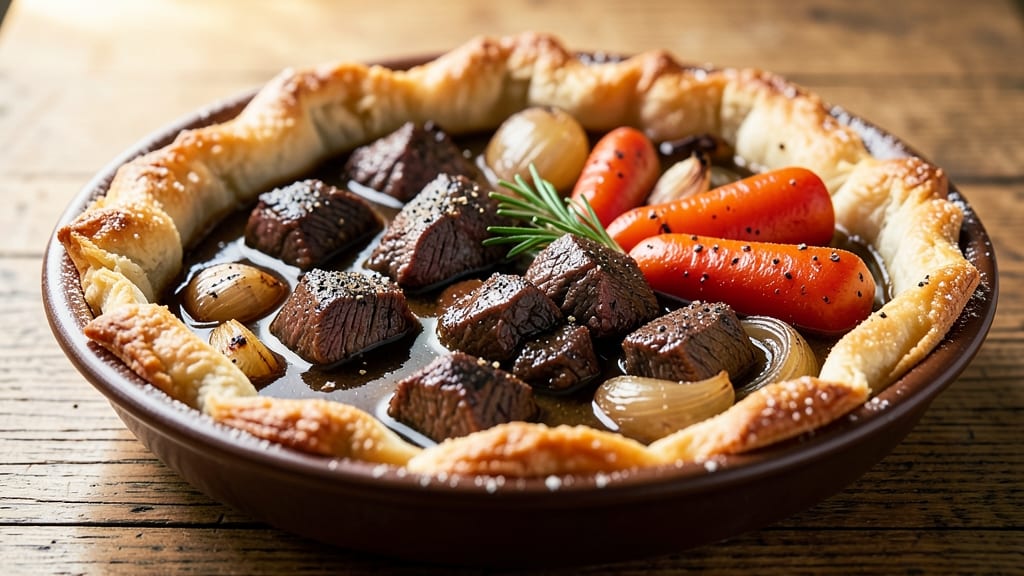
This steak and Guinness pie recipe delivers the ultimate comfort food experience—tender beef slow-cooked in rich, malty Guinness sauce, crowned with a golden, flaky pastry that's crisp enough to cut with a fork.
I first made this during a Boston winter when I needed a dish that could feed a crowd without requiring constant attention, and it became an instant favorite.
The secret lies in the balance of flavors: the deep, roasted notes of the steak, the bittersweet richness of the Guinness, and the buttery layers of the crust.
The preparation begins with a simple yet essential step—searing the steak to lock in juices before it braises in the beer. This method ensures the meat remains fork-tender while absorbing the complex flavors of the Guinness and aromatics.
The filling is then topped with a homemade or store-bought pastry, which bakes into a flaky crown that seals in all the savory goodness. While this dish takes time, the result is worth every minute: a hearty pie that pairs perfectly with a crisp green salad or buttered peas.
What makes this recipe truly special is its versatility. You can prepare the filling ahead of time and assemble the pie just before baking, making it ideal for meal prep or holiday gatherings. The aroma alone—warm, malty, and meaty—will have everyone gathering around the table.
Once sliced, the pie reveals layers of tender beef swimming in a glossy, beer-infused gravy, all topped with that perfect flaky crust. This is the kind of dish that transforms an ordinary dinner into a memorable feast.
Whether you're serving it at a family dinner or a cozy night in, this steak and Guinness pie is a showstopper that delivers restaurant-quality results at home. The technique is straightforward, but the payoff is undeniable. Let’s get started on creating this timeless classic.
Ingredients for steak and guinness pie
Rich, malty Guinness and tender beef combine with a golden, flaky crust for a comforting crowd-pleaser.
| Ingredient | Amount | Notes |
|---|---|---|
| Beef Chuck Roast 🥩 | 2 lb | Cut into 1-inch cubes |
| Guinness Draught 🍺 | 1 ½ cups | Chilled, not warmed |
| Yellow Onion 🧅 | 1 whole | Diced, medium size |
| Carrots 🥕 | 3 whole | Peeled, chopped into chunks |
| Garlic Cloves 🧄 | 4 cloves | Minced, fresh preferred |
| Beef Broth 💧 | 1 cup | Low-sodium preferred |
| Tomato Paste 🍅 | 2 tbsp | Smooth, not chunky |
| Worcestershire Sauce 🧂 | 1 tbsp | Full-strength preferred |
| All-Purpose Flour 🌾 | 2 tbsp | For thickening sauce |
| Fresh Thyme 🌿 | 1 tbsp | Leaves only, chopped |
| Fresh Rosemary 🌿 | 1 tbsp | Leaves only, chopped |
| Salt 🧂 | 1 ½ tsp | Kosher or sea salt |
| Black Pepper 🌶️ | 1 tsp | Freshly ground |
| Unsalted Butter 🧈 | ½ cup | Cold, cubed for pastry |
| All-Purpose Flour 🌾 | 3 cups | Plus 1 tbsp for dusting |
| Ice Water 💧 | ½ cup | For dough elasticity |
| Egg 🥚 | 1 whole | For egg wash |
The beef cut is critical—chuck roast delivers that perfect fork-tender texture after slow cooking. Costco or Whole Foods typically carry well-marbled chuck, but any grocery store with a butcher section will have it. Look for pieces with visible fat marbling; this ensures juiciness. Guinness Draught is essential—avoid Guinness Foreign Extra Stout as it's sweeter and won't provide the same malty depth. For the pastry, store-bought puff pastry (like Pepperidge Farm) works beautifully if you're short on time, but homemade yields that superior flakiness. The butter matters here too—European-style butter (like Plugrá) has higher fat content for better layers.
No Guinness? Substitute with a mix of dark ale and beef broth—Corona Extra or Guinness Extra Stout work in a pinch, but the flavor won't be identical. Fresh thyme and rosemary can be swapped for 1 teaspoon dried each, but reduce the amount slightly as dried herbs are more concentrated. For the pastry, shortening can replace half the butter if you prefer a lighter texture. The tomato paste is non-negotiable for depth—avoid the squeeze tubes as they contain additives. If you're making this ahead, prepare the filling up to 2 days in advance and refrigerate; the flavors only improve with time.
The filling keeps well for 3 days in the fridge before baking, allowing you to prep ahead for holiday gatherings. The pastry dough should be wrapped tightly in plastic and refrigerated for up to 2 days, or frozen for 3 months. Once assembled, the pie can be refrigerated for 24 hours before baking—this relaxes the dough for a better rise. Leftovers reheat beautifully in a 350°F oven for 15-20 minutes, covered with foil to prevent drying. Store baked pie in an airtight container for up to 4 days, though it's best enjoyed within 2 days for optimal texture.
Why You'll Love This Recipe
- One-Pot Magic: I swear by this recipe—just brown the beef, toss in the onions and carrots, pour the Guinness, and let it slow-cook. No extra pans, no fuss, and the rich aroma fills the whole house while you’re chopping veggies.
- Guinness-Garlic Bomb: That first sip of the pie’s sauce—deep, malty, with garlic cutting through—is chef’s kiss. The chuck roast gets so tender it melts, and the carrots caramelize into sweet, jammy perfection. Honestly, I’ll take this over takeout any day.
- Leftovers? Please.: This pie actually improves the next day. The flavors meld even more, and reheating it in the oven (just add a splash of water) turns it into a hearty, comforting meal. I make a double batch on Sundays—lunch is solved for the week.
- Budget Steakhouse Vibes: You’re getting restaurant-quality richness for a fraction of the cost. A whole chuck roast feeds six for under $20, and the Guinness adds that luxurious depth without breaking the bank. (Yes, even on a Tuesday night.)
Step-by-step instructions for steak and Guinness pie
Here's how to create a rich, beer-braised filling topped with a golden, flaky crust.
Prepare the Beef and Vegetable Filling
Cut the 2 lb beef chuck roast into 1-inch cubes and pat them dry with paper towels. This step is crucial for achieving a proper sear later. In a large Dutch oven, heat 2 tablespoons of the unsalted butter over medium-high heat until it foams. Add the beef cubes in a single layer and sear for 3-4 minutes until they develop a deep brown crust. Remove the beef and set it aside.
In the same Dutch oven, add the diced yellow onion and chopped carrots. Cook for 5-6 minutes until the onions soften and the carrots begin to caramelize. Add the minced garlic cloves and cook for another 30 seconds until fragrant. Sprinkle in the 1 tablespoon fresh thyme and 1 tablespoon fresh rosemary, stirring to combine. Return the beef to the pot and add the 1.5 cups chilled Guinness Draught, 1 cup beef broth, 2 tablespoons tomato paste, and 1 tablespoon Worcestershire Sauce. Stir well to combine all ingredients. Bring to a simmer, then reduce heat to low and let it cook uncovered for 1 hour, stirring occasionally, until the beef is tender and the sauce has thickened slightly.
Thicken the Filling and Prepare the Pastry
Remove the Dutch oven from heat and stir in the 2 tablespoons all-purpose flour. This will help thicken the sauce further. Return the pot to low heat and cook for an additional 5 minutes, stirring constantly, until the sauce reaches your desired consistency. Season with 1.5 teaspoons salt and 1 teaspoon freshly ground black pepper. Taste and adjust seasoning if needed. Let the filling cool for 10 minutes before proceeding.
While the filling cools, prepare the pastry. In a large bowl, combine the 3 cups all-purpose flour and the remaining 1 tablespoon flour for dusting. Cut in the 0.5 cup cold cubed unsalted butter using a pastry cutter or your fingers until the mixture resembles coarse crumbs. Add the 0.5 cup ice water, 1 whole egg, and mix until the dough just comes together. Be careful not to overwork the dough. Shape it into a disk, wrap in plastic wrap, and refrigerate for 30 minutes.
Assemble and Bake the Pie
Preheat your oven to 375°F. Roll out the chilled pastry dough on a lightly floured surface to a 12-inch circle, about 1/8-inch thick. Transfer the cooled filling to a 9-inch pie dish. Place the pastry circle over the top, trimming any excess dough. Fold the edges of the pastry under and crimp them to seal. Cut 4 small slits in the center of the pastry to allow steam to escape. Brush the top with a beaten egg wash made from the remaining egg and a tablespoon of water for a golden finish.
Place the pie on a baking sheet to catch any drips and bake for 45-50 minutes, or until the pastry is golden brown and the filling is bubbling through the slits. The internal temperature of the filling should reach 165°F. Remove the pie from the oven and let it rest for 15 minutes before serving. The crust should be flaky and crisp, while the filling remains rich and tender.
Pro Tips For Making Steak And Guinness Pie
- BROWN THE CHUCK FIRST: That beef chuck won’t render its own fat if you simmer it straight into the Guinness. Sear it hard in a hot pan—deep golden crust—before adding any liquid. I used to skip this, and the pie always tasted bland. Now it’s rich and caramelized.
- SWEAT ONIONS LOW AND SLOW: Chop the yellow onion into even ½-inch dice and cook them in butter on low heat for 10 minutes before adding garlic. High heat burns them fast, and burnt onions ruin the pie’s depth. Sounds boring, but it works.
- DON’T SKIP THE GRAVY REDUCTION: After simmering the stew, reduce the Guinness mixture by half uncovered on medium heat. This concentrates the flavor and thickens the sauce—no need for extra cornstarch. I learned this the hard way when my first batch was watery.
- USE COLD CARROTS FOR CRISP TEXTURE: Toss chopped carrots in ice water for 5 minutes before adding them to the pot. Cold veggies hold their shape better, so they stay tender-crisp instead of turning mushy. (Yes, even if you’re impatient like me.)
Troubleshooting this recipe
Undercooked Filling Fix
If your steak filling isn't tender after the 1-hour simmer, the issue is likely insufficient cooking time or improper beef cut. Chuck roast needs 2-3 hours total to become fork-tender. I've found that Costco's chuck roast (well-marbled) cooks faster than lean cuts.
For a quick fix, return the pot to low heat and simmer uncovered for an additional 30-45 minutes, stirring occasionally. Avoid covering the pot—this traps steam and prevents proper browning.
Pastry Too Tough
Overworking the dough or using warm butter creates dense, tough pastry. I learned this the hard way when my first attempt turned out like a hockey puck! Use cold butter cubes (straight from the fridge) and handle the dough minimally.
If your pastry feels stiff, add 1 tablespoon ice water at a time. For extra flakiness, chill the dough for 45 minutes before rolling. Store-bought puff pastry (Pepperidge Farm) is my go-to shortcut when I'm short on time.
Sauce Too Thin
The Guinness sauce can become watery if the flour isn't properly incorporated. Remove the Dutch oven from heat before adding the 2 tablespoons flour—this prevents lumps. Stir vigorously for 1-2 minutes off the heat, then return to low heat.
For an extra boost, mix 1 tablespoon cornstarch with 1 tablespoon cold water and whisk it into the sauce. Simmer for 5 minutes until thickened. I've also had success using 1 teaspoon xanthan gum for a smoother consistency.
Crust Not Golden
A pale crust usually means insufficient egg wash or oven temperature fluctuations. Brush the pastry with an extra layer of egg wash (1 egg yolk + 1 tbsp water) and sprinkle with coarse sugar for extra browning.
Preheat your oven to 375°F for at least 15 minutes before baking. For even cooking, place a baking sheet on the lower rack to catch drips. If your oven runs hot, reduce to 350°F and bake for 5-10 minutes longer.
Filling Too Dry
Overbaking causes the filling to dry out, especially if the pie sits too long before serving. Remove the pie from the oven when the crust is golden and the internal temperature reaches 165°F. Let it rest for 15 minutes before slicing.
To revive dry filling, drizzle 2 tablespoons beef broth over the slices before serving. For extra moisture, add ½ cup Guinness to the filling before baking—this keeps the meat juicy while enhancing flavor.
Guinness Flavor Weak
If the beer flavor seems muted, it might be underseasoned or overpowered by other ingredients. Use 1.5 cups chilled Guinness Draught (not warmed) to preserve its malty depth. For extra richness, add 1 teaspoon smoked paprika or ½ teaspoon ground black pepper to the filling.
I also recommend reducing the sauce by 10 minutes after adding flour to concentrate the flavors. If you're using a substitute like Corona Extra, add ½ teaspoon coffee granules** to mimic the roasted notes of Guinness.
Nutrition facts
Frequently asked questions
Can I use a different cut of beef besides chuck roast?
While chuck roast is ideal for its marbling and tenderness, you can use chuck eye roast or stew beef as substitutes. Avoid lean cuts like sirloin—they won't become tender enough. For a quicker option, use 1.5 lbs ribeye steak, sliced thinly, but reduce the simmering time to 30 minutes to prevent overcooking. The flavor will be slightly different but still delicious!
How far ahead can I make the filling?
The filling tastes even better the next day! Prepare it up to 2 days ahead and refrigerate in an airtight container. Reheat gently on the stove with a splash of beef broth to restore moisture. For the pastry, make the dough 1 day ahead and keep it wrapped in plastic in the fridge. Assemble the pie just before baking for the freshest crust.
What’s the best way to reheat leftovers?
Slice the pie and reheat portions in a 350°F oven for 15-20 minutes, covered with foil to prevent drying. For microwave reheating, cover with a damp paper towel and heat in 30-second bursts until warm. Leftovers keep well in an airtight container for 4 days, but the texture is best within 2 days. Freeze slices (without the crust) for up to 3 months.
Can I make this pie without a Dutch oven?
Use a heavy-bottomed pot or even a large oven-safe skillet. For best results, choose a pot with a tight-fitting lid to help tenderize the beef. If your pot isn’t deep enough, transfer the filling to a baking dish after simmering and cover it with foil while baking. The texture may vary slightly, but the flavor will still be rich and satisfying.
Why does my pastry turn out soggy?
Soggy pastry usually means steam got trapped during baking. Ensure you cut 4-5 slits in the top crust to release steam, and avoid overfilling the pie dish—leave ½-inch headspace. For extra insurance, blind-bake the pastry for 10 minutes at 375°F before adding the filling. Chill the pie 30 minutes before baking to help the crust set properly.