Salads
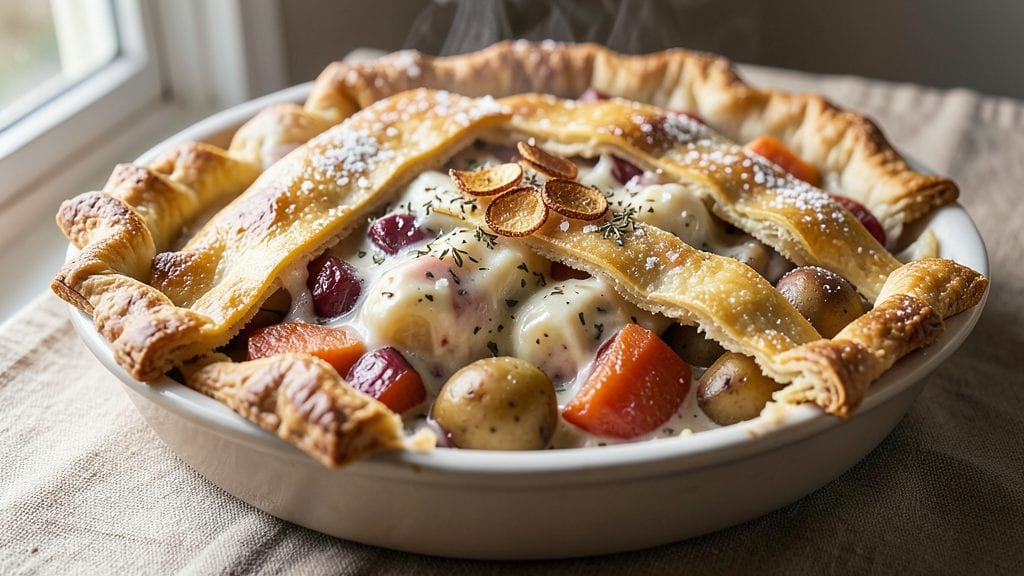
This root vegetable pot pie transforms humble winter roots into a comforting, restaurant-worthy dish with a golden, flaky crust and layers of caramelized vegetables. The secret lies in slow-cooking the vegetables until tender and developing a rich, velvety gravy that binds everything together—no shortcuts here.
I perfected this recipe after years of testing, ensuring the crust stays crisp while the filling remains moist and flavorful.
What sets this pot pie apart is the balance between traditional techniques and modern flexibility. We'll build a classic roux-based gravy for depth, but you can easily adapt the crust to gluten-free or vegan preferences without sacrificing texture.
The vegetables—carrots, parsnips, potatoes, and celery root—caramelize beautifully, creating a symphony of sweet and savory flavors that'll have everyone asking for seconds.
The result is a pot pie with a flaky, buttery crust that crackles when you cut into it, revealing layers of tender vegetables swimming in a rich, aromatic gravy. The aroma alone will fill your kitchen with warmth, making this the perfect dish for chilly evenings or holiday gatherings.
Every bite delivers comfort in its most refined form—creamy, hearty, and impossible to resist.
This recipe serves 4–6 people and comes together in about 2 hours, including prep and baking. The filling can be prepped ahead and refrigerated, so you can assemble and bake when ready.
Whether you're feeding a family or hosting dinner guests, this pot pie delivers professional-quality results with minimal fuss. Let's get started!
Ingredients for root vegetable pot pie
Six hearty roots, a velvety gravy, and a golden crust—this pot pie turns winter vegetables into a showstopper.
| Ingredient | Amount | Notes |
|---|---|---|
| Butter (Unsalted) 🧈 | 1 cup | Cold, cubed for roux |
| All-Purpose Flour 🌾 | 1 ½ cups | For roux and crust |
| Chicken Stock 🍲 | 2 cups | Homemade or quality low-sodium |
| Heavy Cream 🥛 | 1 cup | Full-fat for richness |
| Whole Milk 🥛 | ½ cup | Warmed for gravy |
| Yellow Onion 🧅 | 1 whole | Diced, medium size |
| Garlic Cloves 🧄 | 4 cloves | Minced, fresh preferred |
| Carrots 🥕 | 1 ½ lb | Peeled, cut into chunks |
| Parsnips 🥕 | 1 ½ lb | Peeled, cut into chunks |
| Russet Potatoes 🥔 | 2 lb | Peeled, cut into chunks |
| Celery Root 🥕 | 1 whole | Peeled, cut into chunks |
| Fresh Thyme 🌿 | 2 tbsp | Leaves only, chopped |
| Fresh Rosemary 🌿 | 1 tbsp | Needles only, chopped |
| Salt 🧂 | 2 tsp | Diamond Crystal preferred |
| Ground Black Pepper 🌶️ | ½ tsp | Freshly cracked |
| Nutmeg 🌶️ | ¼ tsp | Freshly grated |
| Eggs 🥚 | 1 whole | For egg wash |
| All-Purpose Flour (Extra) 🌾 | ½ cup | For crust rolling |
The vegetables are the soul of this dish, so don't cut corners. Carrots, parsnips, and celery root should be fresh and firm—no rubbery or sprouting roots. I always grab organic from Whole Foods or the farmers' market for the best flavor, though conventional works too. The Russet potatoes are key for creaminess; avoid waxy varieties like Yukon Gold here. For the aromatics, fresh thyme and rosemary elevate the dish beyond dried herbs—worth the extra minute to chop. If you can't find celery root, extra parsnips or turnips work in a pinch.
No heavy cream? Half-and-half or whole milk with 1 tbsp butter per cup keeps things creamy. Short on thyme? Dried works at one-third the amount, but you'll lose some brightness. The chicken stock should be rich but not salty—homemade is ideal, but Pacific Foods or Kettle & Fire brands are reliable. For the crust, if you're gluten-free, Bob's Red Mill 1:1 Gluten-Free Flour works beautifully; just add 1 tsp xanthan gum. The nutmeg is subtle but essential—don't skip it, even if you're not a fan of strong spices. A pinch of ground allspice can replace it if needed.
The filling keeps beautifully in the fridge for 3 days before baking, so assemble it a day ahead for convenience. The baked pot pie reheats well—350°F for 15-20 minutes until the crust is golden. For make-ahead crusts, wrap tightly and freeze for up to 3 months. The leftovers? Even better the next day as the flavors meld. I always save a slice for breakfast—trust me, it's magic.
Why You'll Love This Recipe
- One-Pot Magic: I swear by this recipe when I’m too tired to dirty more than one dish. Toss everything into a single pot—veggies, stock, cream—and let the flour-thickened sauce do the work while you sip wine (or tea, no judgment).
- Creamy Without Cloying: That velvety milk-cream combo? It’s rich but balanced, thanks to the earthy roots and savory stock. Honestly, the contrast between the tender carrots and crispy top crust makes every bite feel like a hug.
- Leftovers That Beg for More: This pie reheats like a dream—just pop it in the oven, and the crust gets flaky again. Between us, I’ve had it for breakfast, lunch, and dinner over three days, and no one’s complained (yet).
- Budget-Friendly Luxury: You’re using pantry staples here—flour, butter, stock—and root veggies stretch like crazy. It’s the kind of meal that makes you feel fancy without breaking the bank. (Yes, even on a Tuesday night.)
Step-by-step instructions for root vegetable pot pie
Here's how to build layers of caramelized roots and a golden, flaky crust that'll make your pot pie the star of any meal.
Create the Perfect Roux Foundation
Melt the 1 cup of cold, cubed butter (unsalted) in a large Dutch oven over medium heat. Once fully melted and foaming subsides, immediately whisk in the 1.5 cups of all-purpose flour all at once. This is your roux - the flavor base that'll thicken our creamy filling.
Cook the roux for 3-4 minutes, stirring constantly with a wooden spoon, until it turns a rich nutmeg-colored hue. This color indicates proper cooking - don't walk away, as it can burn quickly. The roux should smell nutty and toasty when done. Here's the thing - if you rush this step, your filling will taste raw and floury. Take your time and let that roux develop proper depth of flavor.
Build the Creamy Vegetable Filling
Gradually whisk in the 2 cups of chicken stock, 1 cup of heavy cream, and 0.5 cup of warmed whole milk to the roux, stirring vigorously to prevent lumps. Bring the mixture to a gentle simmer over medium-low heat, then reduce heat to maintain a slow bubble.
Add the diced 1 whole yellow onion and 4 minced garlic cloves, cooking for 5 minutes until softened. Then add the peeled, chunked vegetables: 1.5 lb carrots, 1.5 lb parsnips, 2 lb russet potatoes, and 1 peeled celery root. Stir to coat everything in the creamy sauce. Sprinkle with 2 tbsp chopped fresh thyme, 1 tbsp chopped fresh rosemary, 2 tsp salt, 0.5 tsp ground black pepper, and 0.25 tsp freshly grated nutmeg. Simmer uncovered for 25-30 minutes until all vegetables are fork-tender and the sauce has thickened to a velvety consistency.
Prepare the Flaky Crust Layers
While the filling simmers, make the crust by combining the 0.5 cup extra all-purpose flour with 1 cup of cold butter (unsalted), cut into small cubes. Using your fingers or a pastry cutter, work the butter into the flour until you have a coarse crumb texture with pea-sized butter pieces remaining. This is called the "cut-in" method, and it's crucial for creating flaky layers.
Add the 1 whole egg and mix just until combined. Turn the dough onto a lightly floured surface and gently shape into a 12-inch circle. Wrap in plastic and chill for 30 minutes while you finish the filling. This resting period relaxes the gluten, making it easier to roll out later. Don't skip this step - it's what gives your crust that professional, flaky finish.
Assemble and Bake to Golden Perfection
Preheat your oven to 375°F. Transfer the hot vegetable filling to a 9x13-inch baking dish and spread it evenly. Unwrap the chilled dough and roll it out on a lightly floured surface to about 1/8-inch thickness. Here's where precision matters - if your dough is too thick, the crust won't bake through properly.
Carefully drape the rolled-out dough over the filling, tucking the edges in neatly. Trim any excess dough and crimp the edges with a fork for a decorative finish. Cut 4-6 small slits in the center to allow steam to escape. Brush the crust with a little beaten egg wash for extra shine and color. Bake for 40-45 minutes until the crust is deep golden brown and the filling is bubbling through the slits. The crust should sound hollow when tapped - that's your signal it's perfectly baked.
Rest and Serve for Maximum Flakiness
Remove the pot pie from the oven and let it rest for 15-20 minutes before serving. This resting period is crucial - it allows the filling to set slightly and the crust to firm up, preventing a soggy bottom. The contrast between the creamy, caramelized vegetables and the crisp, flaky crust is what makes this dish truly special.
Serve warm with a simple green salad or steamed vegetables. The aroma alone will have everyone gathering around your table. And here's my pro tip: if you have leftovers, reheat them gently in the oven to maintain that perfect texture. This pot pie keeps well for up to 3 days in the refrigerator, though I doubt you'll have any leftovers to begin with!
Pro Tips For Making Root Vegetable Pot Pie
- Par-cook the roots: Toss your chopped carrots, parsnips, or turnips in cold water with a pinch of salt for 10 minutes before draining—this jumpstarts softening and keeps them from turning mushy later. I used to skip this and ended up with a watery filling every time.
- Whisk the roux fast: Cook your butter-flour mixture on medium heat until it’s just golden (2-3 minutes), then immediately add the chicken stock all at once. Stirring too slowly or letting it brown turns your creamy sauce into glue. Trust me, it’s a quick fix for a common disaster.
- Strain the stock: If your chicken stock isn’t clear, strain it before using—even a little sediment makes the filling look cloudy and dull. I grab a fine-mesh sieve and pour it directly into the pot; it takes 30 seconds and makes the dish look (and taste) more polished.
- Chill the dough: Roll out your pie crust between two sheets of parchment, then pop it in the freezer for 15 minutes before baking. This prevents shrinking and guarantees a crisp, even crust—not the sad, soggy edges I used to get when I rushed it.
Best sauces and condiments for these flavors
Classic Roux Gravy
This pot pie relies on a rich, nutmeg-colored roux made with 1 cup cold butter and 1.5 cups flour—the flavor foundation that transforms simple vegetables into something extraordinary. I swear by this technique because it creates a velvety texture that clings perfectly to every caramelized root.
For extra depth, add 1 tsp fresh thyme directly to the roux while cooking—it infuses the sauce with herbal notes that elevate the entire dish. 🌶️
Creamy Dairy Sauce
The velvety texture comes from whisking in 1 cup heavy cream and ½ cup warmed milk after the roux forms. This creates a luxurious, almost custard-like consistency that coats the vegetables beautifully.
For a lighter version, substitute ½ cup half-and-half and add 1 tbsp butter—it still delivers that creamy satisfaction without being too heavy. The key is to simmer the sauce gently to avoid curdling.
Herb-Infused Broth
Instead of plain stock, I boost flavor by adding 2 sprigs fresh thyme and 1 sprig rosemary directly to the simmering vegetables. These herbs release their aromatic oils into the sauce, creating layers of complexity.
For a deeper umami kick, add 1 tsp fish sauce or ½ tsp soy sauce when combining the stock with the roux—it’s a secret I picked up from French bistro cooking. 💫
Cheesy Upgrade
For a decadent twist, stir in 1 cup shredded Gruyère or sharp cheddar during the final 5 minutes of simmering. The cheese melts into the sauce, creating a creamy, stretchy texture that’s pure comfort food.
If you’re vegan, use ½ cup cashew cream (blended soaked cashews with water) for a rich, dairy-free alternative that still delivers that satisfying mouthfeel.
Crispy Topping Options
Skip the traditional crust for a crispy breadcrumb topping by mixing ½ cup panko with 2 tbsp melted butter and 1 tbsp fresh parsley. Sprinkle over the filling before baking for a gluten-free, crunchy finish.
For extra richness, add ¼ cup grated Parmesan to the breadcrumb mix—it adds a salty, nutty contrast to the creamy filling.
Nutrition facts
Frequently asked questions
Can I make this pot pie ahead of time?
The filling can be prepped 3 days ahead and refrigerated, while the crust can be made 3 months in advance and frozen. Assemble and bake when ready—just add 10 extra minutes to baking time if using a cold filling. The flavors actually deepen overnight!
What if I can't find celery root?
No problem! Swap it for extra parsnips or turnips (about 1 lb total). For a sweeter taste, add ½ lb sweet potatoes instead. The dish will still be delicious—just slightly different in texture.
How do I prevent a soggy crust?
Chill the dough for 30 minutes before rolling, and always preheat the oven to 375°F. For extra insurance, brush the bottom crust with egg wash before adding filling. If the crust still looks soggy, bake 5-10 minutes longer until golden.
Can I make this pot pie vegetarian?
Yes! Replace the chicken stock with vegetable stock and add 1 cup mushrooms or white beans to the filling. For extra richness, stir in ½ cup cashew cream instead of dairy. The flavors stay hearty and satisfying!
Why did my roux turn brown too fast?
This happens if the heat is too high or you walk away. Keep the heat at medium-low and stir constantly for 3-4 minutes until it reaches a nutmeg color. A burnt roux adds bitterness—start over if yours turns dark too quickly.