
Desserts
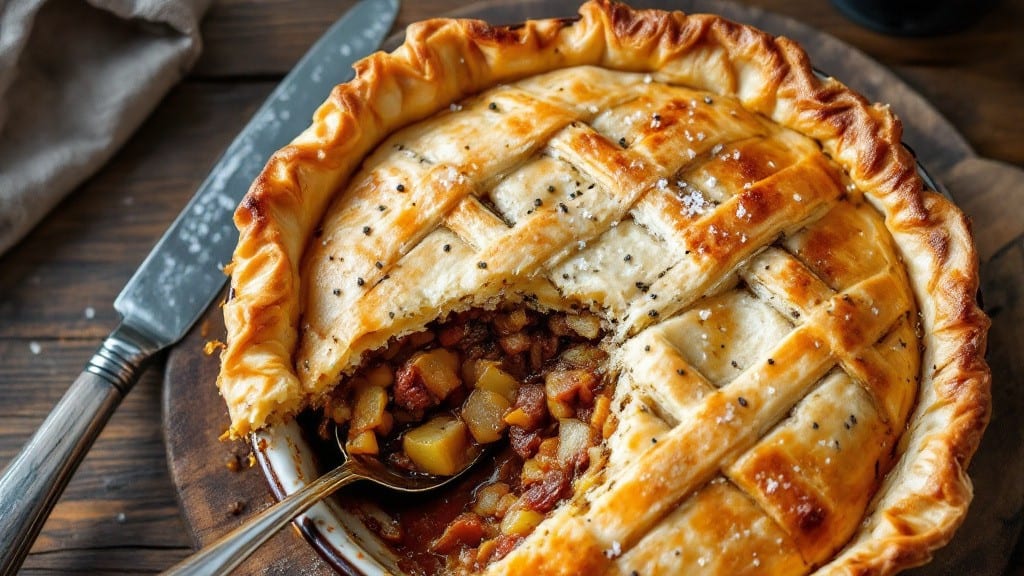
This pasty pie recipe delivers the hearty, rustic flavors of a traditional British classic with a golden, flaky crust encasing tender meat and vegetables. The secret lies in the dough—layered with suet for that signature melt-in-your-mouth texture—and the filling, where minced beef, potatoes, and swede create a savory, comforting center.
I’ve perfected this version after years of testing, ensuring the crust stays crisp while the filling remains juicy and flavorful.
The beauty of pasty pies is their versatility—whether you’re making a classic Cornish version with beef and potatoes or an Appalachian twist with onions and rutabaga, the technique remains the same.
The dough requires just a few simple ingredients, including flour, lard, and a pinch of salt, while the filling comes together in minutes with basic pantry staples. This is the kind of dish that feels like a hug in food form, perfect for cozy dinners or sharing with neighbors.
What you’ll end up with is a golden-brown pasty pie with a crisp, flaky crust that gives way to a rich, savory filling. The meat stays tender, the vegetables soften just enough to blend into the juices, and the aroma alone will have everyone gathering around the table.
It’s the kind of meal that tastes even better the next day, making it ideal for meal prep or holiday gatherings.
Serve it hot with a side of mustard or pickles for a traditional touch, or pair it with a crisp green salad for balance. The crust holds up well, so you can slice it like a pie or serve it whole—either way, it’s a showstopper.
Ready to master this rustic favorite? Let’s get started.
Ingredients for pasty pie
Six dough ingredients and seven filling staples—simple but mighty for this rustic pie.
| Ingredient | Amount | Notes |
|---|---|---|
| All-Purpose Flour 🌾 | 2 ½ cups | For dough, sifted preferred |
| Unsalted Lard 🧈 | 1 cup | Leaf lard for best texture |
| Beef Suet 🥩 | ½ cup | Leaf suet, not crumbled |
| Cold Water 💧 | ½ cup | Chilled from refrigerator |
| Sea Salt 🧂 | 1 tsp | Fine grain preferred |
| Ground Black Pepper 🌶️ | ½ tsp | Freshly ground preferred |
| Lean Ground Beef 🥩 | 1 lb | 85% lean or better |
| Russet Potatoes 🥔 | 2 medium | Peeled, diced small |
| Swede (Rutabaga) 🥕 | 1 medium | Peeled, grated fine |
| Yellow Onion 🧅 | 1 medium | Finely chopped |
| Beef Stock 💧 | ½ cup | Homemade or quality store-bought |
| Fresh Parsley 🌿 | ¼ cup | Chopped, for garnish |
| Butter 🧈 | 2 tbsp | Unsalted, for brushing |
The dough is where magic happens. Leaf lard and suet give that signature flaky texture—don’t substitute with butter or shortening. I grab both at Whole Foods or the butcher counter, but the regular grocery store works too. Look for leaf lard (the kind in sheets) and beef suet that’s still firm. If you can’t find leaf lard, cold cubed lard from the baking aisle works in a pinch. The key? Keep everything cold until mixing. And trust me on the sea salt—kosher or fine grain makes a difference in flavor.
No leaf lard? Cold cubed lard or even cold butter (though texture will differ) gets you close. Swede (rutabaga) not available? Extra potatoes or turnips work well. The beef stock can be bouillon powder mixed with water—just don’t use powdered soup. For the potatoes, Russets are best—they’re starchy and hold up well. If you’re short on time, microwave the diced potatoes for 3 minutes first to soften them faster. The onion can be swapped for leeks or shallots, but yellow onion is classic for this recipe.
This pie keeps beautifully. Wrap the unbaked pie tightly in foil and store in the fridge for up to 2 days—perfect for a holiday meal. Once baked, it reheats wonderfully in a 350°F oven for 15 minutes. Leftovers? They’re even better the next day. I always make an extra one—freezes for 3 months wrapped in parchment and foil. The crust stays crisp, and the filling gets even more flavorful as it rests.
Why You'll Love This Recipe
- No-Fuss Dough: I swear, the crust comes together faster than most takeout orders. Just mix the flour, lard, suet, and cold water—no kneading, no fuss—then roll it out while the filling simmers. That beef suet keeps it flaky even when I’m not feeling patient.
- Rich, Rustic Crunch: The lard and suet give it a buttery, golden crust that shatters at the edges while staying tender underneath. Honestly, it’s the kind of pie that makes you forget you’re eating something “simple”—every bite feels like a hug from your grandma’s kitchen.
- Weeknight Workhorse: I make this for lazy Sundays, potlucks, or when I need to feed a crowd without stress. The filling stays rich even reheated, and the crust holds up for days. Between us, it’s my go-to when I don’t want to think too hard about dinner.
- Budget Magic: Flour, lard, and suet stretch further than you’d think, and the flavor packs a punch without fancy ingredients. I’ll be real: it’s the kind of meal that makes grocery day feel like a win, especially when leftovers taste just as good cold as they do hot.
Step-by-step instructions for rustic pasty pie
Here's how to create a traditional pasty with a flaky crust and hearty filling.
Prepare the Dough for a Flaky Crust
In a large mixing bowl, combine the 2.5 cups all-purpose flour, 1 cup unsalted lard, and 0.5 cup beef suet. Use a pastry cutter or your fingers to work the fat into the flour until the mixture resembles coarse crumbs with pea-sized pieces of fat remaining. This texture is crucial—it ensures a tender, flaky crust.
Add the 1 teaspoon sea salt and 0.5 teaspoon ground black pepper to the flour mixture and stir to evenly distribute. Gradually pour in the 0.5 cup cold water while mixing with a fork or your hands until the dough just comes together. Avoid overworking it—just until it forms a shaggy mass. The dough should be cool to the touch, so if it feels warm, chill it for 10 minutes before proceeding.
Assemble the Savory Filling
In a large skillet, melt the 2 tablespoons butter over medium heat. Add the 1 medium yellow onion, chopped, and cook for 3-4 minutes until softened and translucent. Push the onions to the side of the pan and add the 1 lb lean ground beef, breaking it up with a wooden spoon as it browns.
Once the beef is fully cooked and no longer pink, stir in the 2 medium russet potatoes, peeled and diced small, and the 1 medium swede (rutabaga), peeled and grated fine. Cook for another 5 minutes until the potatoes begin to soften. Pour in the 0.5 cup beef stock and simmer for 5 minutes until the liquid reduces slightly. Remove from heat and let cool for 5 minutes before assembling the pasty.
Shape and Layer the Pasty
Divide the dough into 4 equal portions and roll each into a 10-inch circle on a lightly floured surface. Place one dough circle on a parchment-lined baking sheet and mound the cooled filling in the center, leaving a 1-inch border around the edges. Sprinkle the filling with the 0.25 cup chopped fresh parsley for freshness.
Fold the dough over the filling, pressing the edges firmly to seal. Use a fork to crimp the edges, creating a decorative pattern while ensuring the pasty stays closed during baking. Brush the top with a little beef stock or water to help it brown evenly in the oven.
Bake Until Golden and Crisp
Preheat your oven to 375°F. Bake the pasty for 45-50 minutes until the crust is deep golden brown and the filling is bubbling through the slits. If the crust starts to brown too quickly, tent loosely with foil to prevent burning while allowing the filling to cook through.
Check for doneness by inserting a knife into the center of the pasty—it should come out hot, and the filling should be tender. Let the pasty rest for 10 minutes before slicing to allow the juices to redistribute. Serve warm, cutting through the crust to reveal the savory filling inside.
Pro Tips For Making Pasty Pie
- Cut the Lard Cold: Grab that lard straight from the fridge—no thawing, no softening. The cold fat creates flaky layers like magic, but don’t skip the pulse in the food processor. If you let it warm up, you’ll end up with tough, greasy dough instead of that perfect shatter.
- Salt the Water Right: Toss in a full teaspoon of salt with the cold water before mixing—no need to wait for it to dissolve. The dough needs that flavor from the start, and skipping it means your crust will taste bland no matter how much you season later.
- Handle the Suet Like Butter: Grate the beef suet fine, or at least cut it into tiny cubes—think rice-sized pieces. Big chunks won’t melt evenly, and you’ll end up with dry spots in your crust. I learned this the hard way when my first batch had chewy surprises.
- Chill the Dough Twice: After mixing, wrap the dough and refrigerate for at least 30 minutes. Then, before rolling, give it another 10-minute rest in the fridge. This prevents shrinking when it hits the hot filling, and trust me—your pie crust will thank you.
Make-ahead tips for this dish
Prep Ahead Dough
Make the dough up to 2 days in advance and store it wrapped tightly in plastic wrap in the fridge. The cold temperature prevents the fat from melting, so when you roll it out later, you’ll get that perfect flaky texture.
I like to shape it into a log and flatten it slightly before wrapping—this makes rolling it out into circles much easier. Let it sit at room temperature for 15-20 minutes before using. 💪
Filling Prep Shortcut
Pre-cook the filling ingredients separately to save time. Parboil the potatoes and swede for 5 minutes in salted water, then drain and cool. Sauté the onion and beef ahead of time and store in the fridge.
When ready to assemble, just combine everything with the stock and parsley. This method keeps flavors bright and reduces last-minute stress. ✨
Freezer-Friendly Assembly
Assemble the pasty completely, but don’t bake it yet. Wrap the unbaked pasty tightly in parchment paper followed by plastic wrap, then place in a freezer bag. Label it with the date—it’ll keep for 3 months.
When ready to bake, transfer it straight from the freezer to a 375°F oven and add 10-15 minutes to the baking time. The crust might need a little extra time to crisp up. ❄️
Reheating Leftovers
Slice the pasty and reheat portions in a 350°F oven for 10-15 minutes, covered loosely with foil. For a quick fix, microwave slices on 50% power for 1-2 minutes, then finish under the broiler for 1-2 minutes to crisp the crust.
I always reheat leftovers because the flavors meld even better after resting. 🔥
Make-Ahead for Gatherings
For holiday meals, bake two pasties and store them in an airtight container at room temperature for up to 3 days. Reheat slices in the oven to maintain texture.
The crust stays crisp, and the filling remains juicy—perfect for feeding a crowd without last-minute fuss. I’ve used this trick for Thanksgiving dinners, and it’s always a hit. 💫
Dough Variations
For a lighter crust, replace half the lard with cold butter—just don’t skip the suet, as it’s key for that traditional flavor. If you’re gluten-free, use a 1:1 gluten-free flour blend and reduce water by 1 tablespoon.
The dough will be crumbly, so handle it gently when rolling. 🌾
Nutrition facts
Frequently asked questions
Why does the dough need to stay cold?
The cold temperature keeps the lard and suet firm, which is crucial for creating those signature flaky layers. When you handle cold dough, the fat stays intact in pea-sized pieces, melting during baking to create steam pockets that make the crust light and crisp. If the dough warms up, the fat will melt prematurely, resulting in a tough, dense crust instead. Always chill the dough for 10 minutes before rolling.
Can I make this pasty pie vegetarian?
Swap the ground beef for 1 lb crumbled firm tofu or 1 cup lentils (cooked). Add 1 tablespoon soy sauce or smoked paprika for depth of flavor. You might also want to include 1/2 cup mushrooms for umami richness. The texture will differ slightly, but it’ll still be hearty and satisfying.
How do I fix a soggy crust?
A soggy crust usually means the filling was too wet or the dough wasn't sealed properly. To prevent this, pat the filling dry before assembling and ensure the dough edges are well-cramped. If it happens, brush the top crust with beef stock or egg wash before baking to create a barrier. For extra insurance, blind-bake the crust for 5 minutes before adding filling.
What’s the difference between a Cornish pasty and this recipe?
Traditional Cornish pasties use a single sheet of dough folded over the filling, while this recipe creates a double-crust pie. Cornish versions also often include onion, swede, and beef in a 1:1:1 ratio, while this recipe uses slightly more potatoes for a heartier texture. The dough in this recipe includes suet for extra flakiness, which is less common in the original Cornish version.
Can I make mini pasty pies?
Yes! Divide the dough into 8 small circles (about 6-inch diameter) and use 1/4 of the filling per mini pie. Bake at 375°F for 25-30 minutes until golden. These make perfect appetizers or party snacks—just double the batch for a crowd!