
Desserts
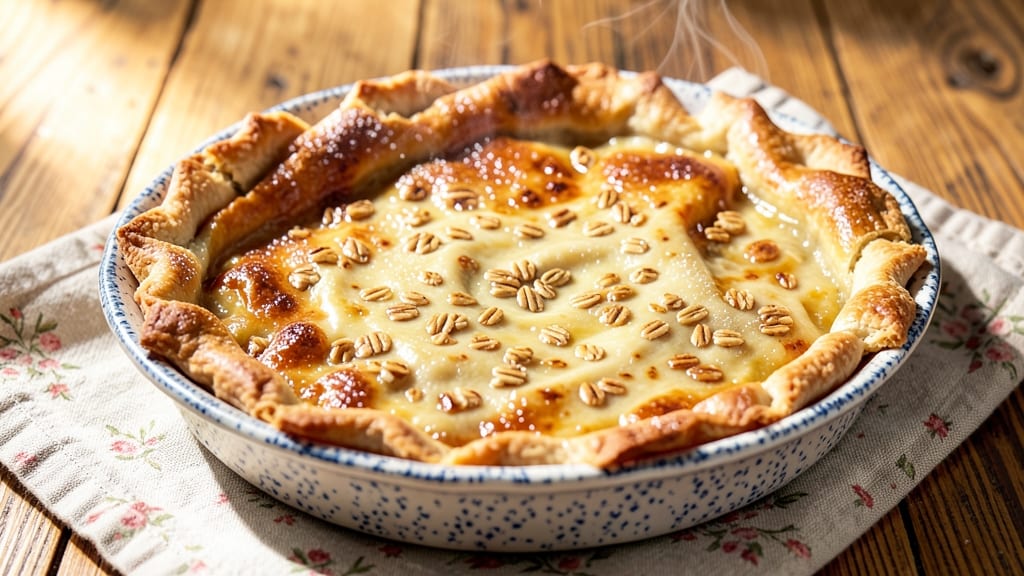
This oat pie recipe delivers a perfect balance of rustic crunch and velvety vanilla swirls that taste like a bakery secret. The secret lies in a buttery oat topping that creates irresistible texture while encasing a creamy custard filling infused with real vanilla.
I developed this recipe after years of perfecting the ratio between crispy oat crust and tender filling—it’s the kind of dessert that disappears faster than you can say "second slice."
The beauty of this oat pie is its simplicity—just a handful of ingredients come together to create something that feels indulgent yet requires minimal effort.
The oat topping is a mix of rolled oats, butter, and brown sugar that transforms into a golden, crunchy lattice when baked, while the vanilla custard filling stays rich and smooth. It’s the ideal dessert for potlucks, family gatherings, or satisfying that late-night sweet tooth without heavy guilt.
What makes this recipe truly special is how the textures play together: the crispy oat lattice contrasts beautifully with the creamy custard, creating a bite that’s both satisfying and elegant. The vanilla swirls add a touch of sophistication, making it feel like a restaurant-quality dessert without the fuss.
Baking time is straightforward, and the pie holds together perfectly when sliced—no soggy bottoms here.
Serve warm with a scoop of vanilla ice cream or a dollop of whipped cream for the full experience. This oat pie is versatile enough for holidays, casual dinners, or whenever you crave something comforting yet impressive. Let’s get baking—your taste buds will thank you.
Ingredients for oat pie
Just twelve ingredients transform into a bakery-worthy dessert with perfect crunchy-topped vanilla swirls.
| Ingredient | Amount | Notes |
|---|---|---|
| Rolled Oats 🌾 | 2 cups | Old-fashioned, not quick oats |
| Unsalted Butter 🧈 | ¾ cup | Cold, cubed for topping |
| Light Brown Sugar 🍚 | ¾ cup | Packed firmly |
| Granulated Sugar 🍬 | ½ cup | For custard filling |
| All-Purpose Flour 🌾 | ½ cup | For custard thickening |
| Large Eggs 🥚 | 4 whole | Room temperature |
| Heavy Cream 🥛 | 1 ½ cups | Full-fat for richness |
| Whole Milk 🥛 | ½ cup | Warmed slightly |
| Pure Vanilla Extract 🌿 | 2 tsp | Real vanilla, not imitation |
| Salt 🧂 | ½ tsp | Fine sea salt |
| Ground Cinnamon 🌿 | 1 tsp | For warm spice touch |
| Vanilla Ice Cream 🍦 | 2 cups | For serving (optional) |
The oats make or break this pie. Old-fashioned rolled oats give that rustic crunch—quick oats get mushy. I grab mine from the bulk section at Whole Foods or Trader Joe's where they stay fresh. For the butter, Plugrá or Land O'Lakes work great, but don't use salted—you control the salt here. The brown sugar should be packed firmly in the cup, no scooping. If you're in a hurry, the Domino brand at regular grocery stores is reliable. Pro tip: Toast the oats for 5 minutes in a dry pan before mixing—they'll get even crunchier.
No rolled oats? Quick oats in a pinch (though texture won't be as perfect). Running low on butter? Coconut oil works in a bind, but it'll taste different. The vanilla extract is non-negotiable—imitation won't cut it. For the custard, if you don't have heavy cream, half-and-half plus a splash of milk works, but it won't be as rich. The cinnamon adds warmth, but if you're allergic, just skip it. Want extra flavor? Add a pinch of nutmeg to the custard. And yes, you can make this ahead—the filling actually tastes better after chilling overnight.
This pie keeps beautifully—3 days covered at room temperature or 1 week in the fridge. The oat topping stays crispy if you store it upside down. For freezing, wrap tightly in foil and it'll last 2 months. The custard filling gets even more velvety after chilling. I always make a double batch because it disappears fast. Serve warm with that vanilla ice cream—Breyers or Ben & Jerry's both work perfectly. Leftovers? Reheat in 10-second bursts in the microwave to keep the topping crisp.
Why You'll Love This Recipe
- No-Fuss Mixing: I swear by the 5-minute stir—just melted butter, oats, and sugars tossed together until it looks like wet sand. No measuring cups cluttering the counter, no waiting for dough to rest.
- Caramelized Edge Magic: That crispy, buttery crust at the bottom? It’s the star. Brown sugar and butter toasted just enough to turn the edges into golden, crackly bliss—like a hug from dessert.
- Breakfast or Snack: Honestly, I eat this cold for breakfast with yogurt, or warm as a pie with ice cream. Same batter, endless ways—weekday grab or Sunday treat, no judgment here.
- Pantry Goldmine: Between us, this recipe uses what’s already lurking in your cupboards. Rolled oats and flour? You’ve got ‘em. Leftovers? Reheat slices in the oven for 10 minutes—still perfect. Budget-friendly doesn’t even begin to cover it.
Step-by-step instructions for rustic crunch-topped vanilla swirl delight
Here's how to build this showstopping dessert layer by layer—crispy oat topping meets silky vanilla custard.
Make the Vanilla Custard Filling
In a medium saucepan, combine the 1.5 cups heavy cream, 0.5 cup whole milk, 0.5 cup granulated sugar, 2 tsp pure vanilla extract, and 0.5 tsp salt. Bring to a gentle simmer over medium heat until small bubbles form around the edges—about 5 minutes. This ensures the cream heats evenly without scorching.
In a separate bowl, whisk together the 4 whole large eggs until frothy. Slowly pour the hot cream mixture into the eggs while whisking constantly—this tempering step prevents scrambled eggs. Return everything to the saucepan and cook over low heat, stirring frequently, until the custard thickens enough to coat the back of a spoon (about 8-10 minutes). It should reach 170°F on an instant-read thermometer. Immediately remove from heat and stir in 1 tsp ground cinnamon. Cover with plastic wrap (pressed directly on the surface) and chill for at least 2 hours—this step is non-negotiable for a smooth filling.
Prepare the Oat Crust Mixture
Preheat your oven to 350°F. In a large mixing bowl, combine the 2 cups rolled oats, 0.75 cup light brown sugar, and 0.5 cup all-purpose flour. Cut in the 0.75 cup cold unsalted butter using a pastry cutter or your fingers until the mixture resembles coarse crumbs with pea-sized butter pieces—this creates pockets of flavor when baked. Spread the mixture evenly into a 9-inch pie dish, pressing down gently but not packing it too tightly.
Bake for 15 minutes until the edges are light golden brown and the top looks crisp. Let cool slightly while you prepare the custard layer—this prevents the crust from getting soggy when you add the warm filling later.
Assemble and Bake the Pie
Pour the chilled vanilla custard over the cooled oat crust, spreading it evenly to the edges. Return the pie to the oven and bake for 25-30 minutes until the custard is set but still slightly jiggly in the center—this ensures a perfect texture when sliced. Watch closely after 20 minutes as ovens vary; you want the custard to be just set but not dry.
Remove from the oven and let cool completely at room temperature. The contrast between the warm spiced crust and cool custard is what makes this pie magical. For the ultimate presentation, serve with 2 cups vanilla ice cream on the side—let everyone scoop their own for that classic pie-and-ice-cream combo.
Optional Ice Cream Topping (If Using)
If you're serving with ice cream, wait until the pie has cooled completely before adding it. The ice cream will melt slightly from the warmth of the pie, creating a luscious sauce that pools at the bottom of each slice. I like to let the ice cream sit at room temperature for 10 minutes before serving so it's easier to scoop without making a mess.
Slice the pie into 8 equal wedges using a sharp knife dipped in hot water and wiped dry between cuts—this ensures clean slices every time. The texture contrast between the crisp oat crust, creamy custard, and cold ice cream makes this dessert unforgettable. Store any leftovers covered in the fridge for up to 3 days, though I doubt there'll be any left!
Pro Tips For Making Oat Pie
- TOAST THE OATS FIRST: I learned this the hard way—skipping this step makes your pie taste like oatmeal, not dessert. Spread the rolled oats on a baking sheet and toast them at 350°F for 8–10 minutes until they’re golden and smell nutty. The extra effort gives that caramelized depth you crave.
- USE COLD BUTTER: Cut the unsalted butter into tiny cubes and toss it into the dry oat mixture before adding any liquid. This keeps the texture crumbly instead of greasy—no one wants a soggy oat pie. (Yes, even if you’re impatient like me.)
- STOP WHEN IT LOOKS DONE: The pie’s edges will pull away from the pan and look set before it’s fully baked. After 20 minutes, check the center—it should jiggle slightly when shaken. Overbaking turns it dry; underbaking leaves it gummy. Trust your eyes, not the timer.
- SWAP FLOUR FOR CORNMEAL: I skip the all-purpose flour and replace half with fine cornmeal. It adds a subtle grit and keeps the pie from getting too dense—no one notices, but your pie will hold together better. (Your future self will thank you.)
Storing and reheating this dish
Room Temperature Storage
This oat pie stays fresh and delicious for 3 days at room temperature if stored properly. Place it on a wire rack inside an airtight container with a paper towel underneath to absorb any moisture.
The oat topping remains crispy when stored this way, but the custard filling may firm up slightly—just reheat gently to restore its creamy texture. I always store mine upside down to keep the crust intact. 💫
Fridge Preservation
For longer storage, refrigerate the pie in an airtight container for up to 1 week. The custard actually improves in flavor overnight, becoming even richer. When ready to serve, let it sit at room temperature for 15-20 minutes before slicing—this prevents the custard from being too firm.
The oat topping stays perfectly crisp if you reheat the pie for 10-15 seconds in the microwave before serving. 🥧
Freezer-Friendly Method
Wrap the entire pie tightly in plastic wrap followed by aluminum foil to prevent freezer burn. It keeps for 2 months in the freezer, though I recommend eating it within 1 month for best texture.
To serve, thaw overnight in the fridge, then reheat in a 350°F oven for 15-20 minutes until warmed through. The custard will be slightly softer after freezing, but the oat topping remains delightfully crunchy. ❄️
Reheating Techniques
For the best results, reheat individual slices in a 300°F oven for 5-7 minutes to maintain crispiness. If using the microwave, cover with a damp paper towel and heat in 10-second bursts until warmed through—this prevents the custard from becoming rubbery.
For a restaurant-style finish, broil for 1-2 minutes to crisp the oat topping while keeping the custard creamy. 🔥
Serving Leftovers
Leftovers taste just as good as fresh slices, especially when reheated properly. Serve with a scoop of vanilla ice cream to revive the pie experience. If the custard has thickened too much after refrigeration, add a splash of heavy cream and warm gently to restore its silky texture.
The contrast between warm pie and cold ice cream makes every bite feel special. 🍦
Make-Ahead Strategy
I always make this pie a day ahead—it gives the flavors time to meld beautifully. The custard develops deeper vanilla notes, and the oat topping stays perfectly crisp. Store it in the fridge overnight, then reheat slightly before serving.
This is especially useful for holiday gatherings where you can focus on other dishes while the pie does its magic. 💡
Nutrition facts
Frequently asked questions
Can I make this oat pie without a pie dish?
Use a 9-inch round cake pan or even a deep skillet lined with parchment paper. For extra rustic charm, try baking it in a cast-iron skillet—just grease it well first. The oat crust will still get crispy, though the edges might be slightly thicker. If using a skillet, press the oat mixture firmly against the sides to create a defined crust.
Why does my custard filling look grainy?
Grainy custard usually happens when the eggs cook too long or the mixture isn't tempered properly. Always whisk the eggs until frothy before slowly adding the hot cream. Remove the custard from heat the moment it coats the back of a spoon (170°F), and never let it boil. For extra smoothness, strain the finished custard through a fine-mesh sieve before pouring it over the crust.
Can I substitute quick oats for rolled oats?
You can, but your texture will be softer—not the signature crunch. Quick oats break down more during baking, so if you must use them, toast them in a dry pan for 5 minutes first to add some crispness. For the best results, stick with old-fashioned rolled oats—they hold their shape and create that perfect lattice-like crunch.
How do I make this pie gluten-free?
Replace the all-purpose flour in the crust with a 1:1 gluten-free baking flour blend (like Bob's Red Mill). For the custard, use cornstarch or arrowroot powder (2 tablespoons) instead of flour to thicken it. The oat crust will still hold together, though it might be slightly crumbly. Always check your gluten-free flour blend for xanthan gum—it helps bind the mixture.
Can I add fruit to this oat pie?
Fold 1 cup of fresh berries (like raspberries or blueberries) or ½ cup chopped peaches into the custard before baking. For a tropical twist, add ½ cup diced mango or pineapple. Just toss the fruit in 1 tablespoon sugar and let it sit for 10 minutes before mixing into the custard to release its juices.