Desserts
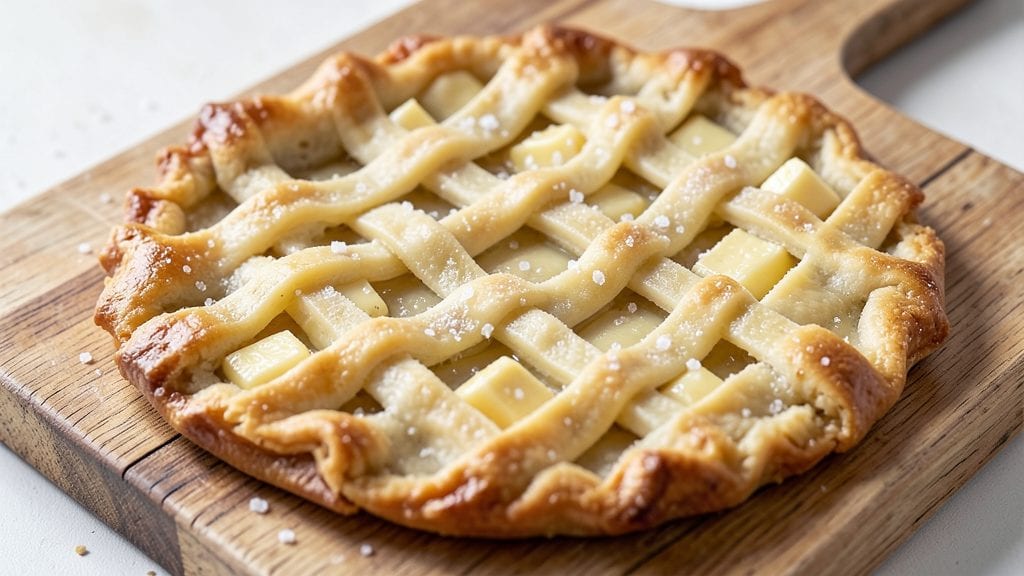
Joanna Gaines' pie crust recipe delivers the flaky, golden layers that make every slice worth savoring—no shortcuts, just precise technique. 💛 I've perfected this all-butter crust over years of baking pies that hold their structure all day, whether it's an apple lattice or pecan pie filling.
The secret lies in cold butter and minimal handling, which creates those signature shatterproof layers.
This recipe uses just five ingredients but requires attention to detail—cold butter cut into flour, gentle handling when rolling, and proper blind-baking for fillings. Even beginners can achieve restaurant-quality results with these foundational steps.
The crust stays crisp at room temperature for hours, making it ideal for holiday gatherings or make-ahead desserts.
What you'll end up with is a pie crust so tender it practically melts in your mouth while maintaining enough structure to hold even the juiciest fillings.
The aroma of butter and vanilla fills your kitchen as it bakes, creating a golden, flaky shell that's the perfect foundation for any pie. This is the crust that makes your desserts look—and taste—like they came from a professional kitchen.
Use it for classic apple pies, rich pecan fillings, or even savory quiche—this versatile crust adapts to any recipe while maintaining its signature texture. Store leftovers in the fridge for up to 3 days or freeze for months.
Let's get started on creating the perfect foundation for your next dessert masterpiece.
Ingredients for joanna gaines pie crust
Five simple ingredients, one golden crust—this is Joanna Gaines' secret to flaky perfection every time.
| Ingredient | Amount | Notes |
|---|---|---|
| All-Purpose Flour 🌾 | 2 ½ cups | Sifted for lighter texture |
| Unsalted Butter 🧈 | 1 cup | Cold, cubed into 1/2-inch pieces |
| Granulated Sugar 🍚 | ¼ cup | For subtle sweetness |
| Vanilla Extract 🌸 | 1 tsp | Pure, high-quality vanilla |
| Ice Water ❄️ | ½ cup | Chilled, for binding |
| Diamond Crystal Kosher Salt 🧂 | ½ tsp | Fine grain preferred |
The butter is non-negotiable here. European-style butter like Plugrá or Land O'Lakes European has higher fat content, which gives you that signature flakiness. Grab it from Whole Foods or Costco if you want to splurge—it's worth the extra cost for this crust. Keep those butter cubes cold until they're cut into the flour. If your kitchen gets warm, chill them on a plate in the freezer for 10 minutes. The flour? King Arthur or Gold Medal are my go-tos—they're finely milled and give consistent results. Sift it first to avoid dense patches, and don't skip this step (trust me on the flakiness).
No ice water? Cold tap water works in a pinch, but the ice keeps things chilled longer. Running short on vanilla? Vanilla bean paste at half the amount adds extra depth. The sugar can be swapped for powdered sugar, but it dissolves faster during rolling. Salt is crucial—Diamond Crystal kosher is the gold standard, but regular table salt at half the amount works too. Pro tip: If your dough feels too dry, add 1 tbsp more ice water. Too sticky? Chill it for 15 minutes before rolling. And whatever you do, don't overwork the dough—this is where most home bakers go wrong.
This crust keeps beautifully. Wrap tightly in plastic wrap and store in the fridge for up to 3 days—it actually tastes better the next day as the flavors meld. For longer storage, freeze the wrapped dough for up to 6 months. Thaw overnight in the fridge before using. The secret to reheating? 5 minutes at 350°F brings it back to crisp perfection. And if you're prepping for a crowd, make two crusts at once—they freeze like a dream.
Why You'll Love This Recipe
- No-Fuss Butter Magic: I swear, the cold butter cut into flour with a pastry cutter? It’s like the recipe does half the work for you. No food processor, no stress—just a few minutes of pressing and folding until it resembles something resembling dough.
- Vanilla-Butter Bliss: That sugar and vanilla extract? It’s not just sweet—it’s rich. The butter gets so tender, the crust has this melt-in-your-mouth quality that makes every bite feel like a little dessert. (Yes, even on a Tuesday night.)
- Pie for Any Occasion: Need a crust for apple pie, pecan, or even savory galettes? This one’s your go-to. The same simple mix works for holidays, weeknight dinners, or when you’re craving something homemade but don’t want to fuss.
Step-by-step instructions for Joanna Gaines' pie crust recipe
Here's how to create layers so tender they practically melt in your mouth—just like Joanna's.
👨🍳 Step 1: Prep Cold Butter and Flour for Perfect Texture
First, take the 1 cup unsalted butter and cut it into ½-inch cubes. Place them in the freezer for 10 minutes—this ensures they stay cold and firm when you work with them. Cold butter is non-negotiable for flaky layers; if it softens too much, your crust will turn out tough instead of delicate.
In a large bowl, whisk together the 2.5 cups all-purpose flour and 0.5 tsp diamond crystal kosher salt. Sift the flour if it's not already sifted—this aerates it and prevents a dense crust. Add the 0.25 cup granulated sugar and mix lightly. The sugar isn't just for sweetness; it helps create a tender crumb and prevents the crust from becoming too flaky in an overly buttery way.
🥘 Step 2: Cut Butter into Flour Until Pea-Sized
Add the cold butter cubes to the flour mixture. Using your fingertips or a pastry cutter, work the butter into the flour until you have pea-sized crumbs with some larger pieces remaining. This is the magic step—you want a mix of textures so the butter melts unevenly during baking, creating those signature flaky layers.
Here's the thing—don't overwork it. Once the mixture resembles coarse crumbs with some flour still visible, stop. Over-mixing develops gluten, which leads to a tough crust. You're aiming for something that looks like wet sand when you press it together.
🍳 Step 3: Add Vanilla and Ice Water for Binding
Create a well in the center of the flour mixture and add the 1 tsp vanilla extract and 0.5 cup ice water. The ice water is crucial—it keeps the butter cold longer as it mixes in, preventing premature melting. Use a fork or wooden spoon to gently stir until the dough just comes together when pressed.
You might think you need more water, but resist the urge. The dough should be slightly shaggy and hold together when you press it. If it's too dry, add a teaspoon more ice water. If it's too wet, sprinkle in a little more flour. The goal is a dough that's just moist enough to hold when pressed but not sticky enough to be difficult to handle.
🔪 Step 4: Chill the Dough for Maximum Flakiness
Divide the dough into two equal discs, flatten slightly, and wrap each in plastic wrap. Place them in the refrigerator for at least 1 hour—I prefer 2 hours if you have time. Chilling is non-negotiable for flaky layers. It firms up the butter so it doesn't melt during rolling, and it relaxes the gluten for easier handling.
While the dough chills, take a moment to prep your workspace. Roll out the dough on a lightly floured surface or between two sheets of parchment paper. This prevents sticking and makes rolling much easier. The cooler the dough, the less it will stick, so work quickly once you take it out of the fridge.
⏰ Step 5: Roll and Fit for Perfect Layers
Roll one disc into a 12-inch circle, about ⅛-inch thick. If the dough starts to warm up or stick, return it to the fridge for 10 minutes to firm up. Fit the rolled crust into your pie dish, pressing gently to shape it to the bottom and sides. Trim any excess dough hanging over the edge, leaving about ½ inch to fold later.
For the top crust, roll the second disc to 12½ inches (slightly larger than the bottom). Fold the edge of the top crust under itself to create a ½-inch rim, then place it over the pie filling. Crimp the edges together by pressing with your fingers or using a fork to create a decorative pattern. Cut a few slits in the top crust for steam to escape—this prevents a soggy bottom.
Pro Tips For Making Joanna Gaines Pie Crust
- CHILL THE BUTTER FIRST: Joanna Gaines’ recipe calls for cold butter—don’t skip this. Cut the butter into cubes and pop them in the freezer for 10 minutes before mixing. I learned this the hard way when my crust turned greasy and tough; cold butter creates flaky layers, not a sad, dense mess.
- WEIGH YOUR FLOUR: Scooping flour from the bag packs it down, adding extra moisture and making your crust dense. Use a kitchen scale for the 2 ½ cups—it’s the thing that matters most. If you’re measuring by cup, fluff the flour first and level it off with a knife. Trust me, your crust will thank you.
- WORK FAST WITH ICE WATER: The ice water in this recipe is non-negotiable—it keeps the dough from getting too warm. Keep a bowl of ice water nearby and add it gradually, 1 tablespoon at a time, while mixing. Dumping it all in at once makes the dough sticky and hard to handle. (Yes, even if you’re impatient like me.)
- REST THE DOUGH: After mixing, let the dough sit covered in the fridge for at least 30 minutes—this relaxes the gluten and prevents shrinking when baked. I skip this when I’m lazy, but the crust edges stay crisp, not puffy and sad. No shortcut here if you want that perfect Joanna Gaines flakiness.
Serving suggestions for leftovers
Classic Pairings
Serve this buttery crust with apple pie filling for the ultimate comfort dessert—Joanna’s signature style. The flaky layers contrast beautifully with the spiced apples, creating that perfect balance of crunch and softness.
I like to add a scoop of vanilla bean ice cream on top for an extra touch of elegance. 🍏
Holiday Crowd Pleaser
For Thanksgiving or Christmas, use this crust for a pecan pie or pumpkin pie—the buttery richness enhances the flavors of the filling. I recommend adding a lattice top for visual appeal, which also lets guests serve themselves individual slices.
A sprinkle of cinnamon sugar on the lattice adds a festive touch.
Savory Twist
Don’t limit this crust to sweets! Use it for savory quiche with sharp cheddar and spinach, or a ham and cheese pie for brunch. The flakiness holds up perfectly to rich fillings, and the vanilla adds a subtle depth that pairs well with herbs like thyme or rosemary.
Make-Ahead Magic
Pre-bake the crust and store it in an airtight container at room temperature for up to 2 days—it stays crisp and ready for fillings. For longer storage, freeze the unbaked crust for up to 3 months.
Thaw in the fridge overnight, then bake as directed. This is a game-changer for holiday prep!
Garnish Like a Pro
After baking, brush the crust with a light corn syrup glaze (mix 2 tbsp corn syrup with 1 tbsp water) for a glossy finish. For a rustic look, sprinkle crushed pecans or toasted coconut flakes on top. A dusting of powdered sugar adds a professional touch to any pie.
Serving Temperature
Serve pies at room temperature for the best texture—this lets the filling set slightly while keeping the crust crisp. If your kitchen is warm, chill the pie for 10-15 minutes before slicing.
Warm pies (straight from the oven) can make the crust soggy, so always let it cool for at least 30 minutes first. 💫
Nutrition facts
Frequently asked questions
Why does Joanna Gaines' recipe use ice water instead of regular water?
The ice water keeps the butter cold longer during mixing, preventing it from melting too quickly. This creates more flaky layers when baked, as the butter melts unevenly in the oven. Regular water would warm up faster, potentially making the crust tough instead of delicate.
Can I make this crust without a food processor?
Use your fingertips or a pastry cutter to work the cold butter into the flour until you get pea-sized crumbs. Just be gentle—overworking develops gluten, which makes the crust tough. The key is to keep everything cold and handle the dough minimally.
How do I fix a cracked crust when baking?
Cracks happen when the dough warms too quickly. Preheat your oven to 375°F and place a baking sheet on the lower rack to catch drips. If cracks appear, simply brush them with a little corn syrup glaze (2 tbsp corn syrup + 1 tbsp water) after baking for a seamless look.
Can I use this crust for savory dishes like quiche?
Yes! The same flaky texture works perfectly for savory pies. Just omit the sugar and vanilla, and add 1 tsp dried herbs (like thyme or rosemary) to the dough. The buttery richness pairs beautifully with cheeses, meats, and veggies.
Why does my crust turn out greasy?
Greasy crusts usually mean the butter melted too much during prep. Keep everything cold, chill the dough thoroughly, and avoid overworking. If it happens, bake at 350°F instead of 375°F to slow butter melting. Also, ensure your butter is 80% fat content (European-style butter works best).