
Desserts
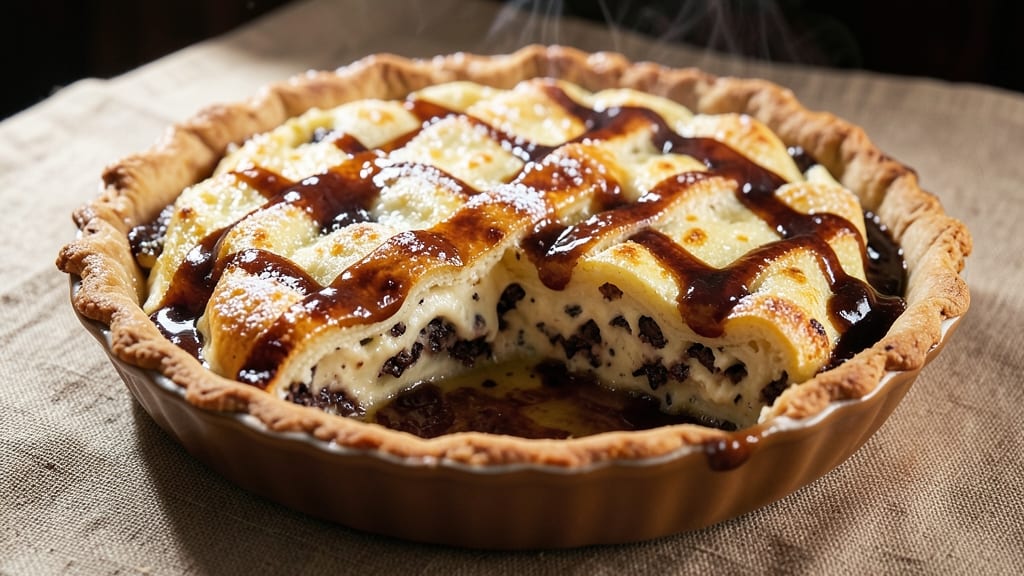
This Irish Guinness pie recipe transforms a classic dessert into a rich, stout-infused masterpiece with layers of chocolate and caramel. The deep, malty notes of Guinness create a sophisticated depth that elevates every bite, while a crisp pastry crust provides the perfect contrast.
I developed this recipe after years of experimenting with Guinness desserts, and the balance of bitterness and sweetness is what makes it truly special.
The filling combines a velvety pastry cream infused with Guinness, melted chocolate, and a touch of caramelized sugar for added richness. This recipe uses a simple shortcrust pastry for the crust, which bakes to a golden, flaky finish that holds up beautifully to the luscious filling.
The key to success lies in the careful balance of ingredients—too much sweetness can overpower the stout, while too little can leave the pie tasting flat.
By the time it emerges from the oven, you’ll have a pie with a crisp, golden crust and a filling that’s smooth, decadent, and perfectly balanced between the bitterness of Guinness and the sweetness of chocolate and caramel.
The aroma alone will draw everyone to the table, and the first bite delivers a harmonious blend of flavors that’s both comforting and sophisticated.
Serve it warm with a dollop of whipped cream or a drizzle of caramel sauce for an extra touch of indulgence. This pie is ideal for special occasions, holiday gatherings, or whenever you want to impress with a dessert that’s as impressive as it is delicious.
Let’s get started on creating this stout-infused masterpiece.
Ingredients for irish guinness pie
Sixteen ingredients transform into a decadent pie where Guinness's malty depth meets chocolate's richness.
| Ingredient | Amount | Notes |
|---|---|---|
| Guinness Stout 🍺 | 1 ½ cups | Full-bodied, non-draft preferred |
| Heavy Cream 🥛 | 2 cups | Full-fat for optimal richness |
| Granulated Sugar 🍚 | ¾ cup | Superfine preferred for smoothness |
| All-Purpose Flour 🌾 | ½ cup | Sifted for pastry cream |
| Egg Yolks 🥚 | 4 whole | Fresh, room temperature |
| Unsalted Butter 🧈 | ½ cup | Cold, cubed for pastry |
| Dark Chocolate Chips 🍫 | 12 oz | 70% cacao minimum |
| Vanilla Extract 🌸 | 1 tbsp | Pure Madagascar preferred |
| Salt 🧂 | ½ tsp | Diamond Crystal kosher |
| Brown Sugar 🍚 | ¼ cup | Packed, light variety |
| Shortcrust Pastry 🥧 | 1 sheet | Store-bought or homemade |
| Heavy Whipping Cream 🥛 | 1 cup | Chilled for whipped topping |
| Powdered Sugar 🍚 | 2 tbsp | For whipped cream |
The Guinness is non-negotiable—opt for Guinness Draught if available, as its smoother finish enhances the pie's velvety texture. Whole Foods or Trader Joe's stock quality stout, but any reputable liquor store will carry it. For the chocolate, Valrhona or Callebaut brands deliver superior melting properties, though high-quality supermarket brands like Ghirardelli work in a pinch. The shortcrust pastry should be pre-chilled before rolling to prevent shrinking during baking. If making from scratch, use cold butter and ice water for optimal flakiness.
No Guinness? Dry black tea steeped in water mimics the bitterness, though it lacks the depth. Substitute dark chocolate for milk chocolate, but reduce the amount to 10 oz to maintain balance. The pastry cream requires precise tempering—heat the cream to 180°F before whisking in the yolks to prevent scrambling. For a gluten-free option, swap the flour for almond flour, though texture will differ. The brown sugar can be omitted if you prefer a less caramelized note, but it adds essential depth to the filling.
Store the pie at room temperature for up to 4 hours before serving to allow flavors to meld. Refrigerate leftovers for 3-4 days, though the crust may soften. For longer storage, freeze the assembled pie (unbaked) for up to 3 months350°F oven for 5-7 minutes to restore crispness.
Why You'll Love This Recipe
- The secret’s in the balance: Guinness adds deep, malty warmth while the cream and sugar soften it into something almost custard-like. It’s not sweet or bitter—just perfect, like a dessert that sneaks in as a grown-up treat.
- No-Fuss Assembly: That thick, velvety filling comes together in one bowl—just whisk the yolks, cream, and sugar, then fold in the warmed Guinness. Honestly, the hardest part is waiting for it to set, and even that’s just 30 minutes in the oven.
- Rich Without Effort: The secret’s in the balance: Guinness adds deep, malty warmth while the cream and sugar soften it into something almost custard-like. It’s not sweet or bitter—just perfect, like a dessert that sneaks in as a grown-up treat.
- Weeknight Crowd-Pleaser: This isn’t a fussy dessert. Serve it warm with a scoop of vanilla ice cream for a pub-style vibe, or chill it for a no-bake option. My in-laws think it’s “fancy,” but it’s really just flour, eggs, and a little patience.
Step-by-step instructions for Irish Guinness pie
Here's how to assemble this decadent dessert with perfect layers and rich flavors.
Prepare the Chocolate Guinness Filling
In a medium saucepan, combine the 1.5 cups Guinness Stout, 2 cups Heavy Cream, 0.75 cup Granulated Sugar, and 0.5 tsp Salt. Bring to a gentle simmer over medium heat and cook for 10-12 minutes until the mixture reduces by about one-third and thickens slightly. You'll notice the aroma deepen as the alcohol cooks off and the stout's malty notes intensify.
Remove from heat and whisk in the 4 whole Egg Yolks one at a time, ensuring each is fully incorporated before adding the next. Return the pan to low heat and stir constantly with a wooden spoon until the mixture thickens enough to coat the back of the spoon (2-3 minutes). This creates a velvety base that will hold the chocolate beautifully. Immediately stir in the 1 tbsp Vanilla Extract and set aside to cool slightly.
Incorporate Chocolate and Caramel Layers
In a separate heatproof bowl, melt the 12 oz Dark Chocolate Chips and 0.5 cup Unsalted Butter together over a saucepan of simmering water (double boiler method), stirring until completely smooth. Once melted, remove from heat and gradually whisk the chocolate mixture into the warm Guinness cream until fully combined and glossy.
In a small saucepan, melt the 0.25 cup Brown Sugar over medium-low heat until it turns into a deep amber caramel. Immediately pour this caramel in a thin stream over the chocolate mixture while whisking constantly to create ribbons. This technique creates the signature marbled effect that makes this pie visually stunning and adds complex sweet-savory depth.
Assemble the Pastry Layers
Roll out the 1 sheet Shortcrust Pastry on a lightly floured surface to fit a 9-inch pie dish, leaving a ½-inch overhang on all sides. Press it gently into the dish, then chill in the refrigerator for 15 minutes while you prepare the filling. This ensures the pastry holds its shape during baking without shrinking.
Pour the chocolate Guinness mixture into the chilled pastry shell, spreading it evenly. The filling should come up to within ¼-inch of the top edge. Fold the overhang inward to create a decorative border, then use a fork to crimp the edges neatly. This creates both visual appeal and helps prevent the filling from overflowing during baking.
Bake to Golden Perfection
Preheat your oven to 350°F. Place the assembled pie on a baking sheet lined with parchment paper to catch any drips. Bake for 40-45 minutes until the pastry is golden brown and the filling is set but still slightly jiggly in the center. The edges should be crisp while the center maintains a fudgy texture.
Remove from the oven and let cool completely on a wire rack before adding the whipped cream topping. This cooling period allows the filling to set properly and prevents the whipped cream from melting. The contrast between the warm, rich filling and cool whipped cream creates the ultimate texture experience.
Add Whipped Cream Topping
In a chilled bowl, whip the 1 cup Heavy Whipping Cream with the 2 tbsp Powdered Sugar until soft peaks form. Spread this lightly over the cooled pie filling, creating swirls or dollops for presentation. The acidity from the Guinness pairs beautifully with the sweet whipped cream, balancing the dessert perfectly.
Serve immediately while the pie is still slightly warm in the center. Each slice should reveal the rich chocolate Guinness filling with its characteristic marbled caramel streaks, all encased in the buttery shortcrust pastry. The combination of deep stout flavors with the sweet chocolate creates a dessert that's both comforting and sophisticated.
Pro Tips For Making Irish Guinness Pie
- Whisk the yolks cold: I learned this the hard way—warm egg yolks turn that creamy custard into scrambled eggs. Stir them into the warm Guinness-cream mixture last, or pop the bowl in an ice bath for 10 seconds before adding. The pie’s silky texture depends on this.
- Reduce the Guinness first: Skimping here means a watery filling. Simmer the Guinness alone for 3–4 minutes until it’s reduced by about ¼ cup—this concentrates the flavor and thickens the base without extra flour. (Yes, even if you’re impatient like me.)
- Sift that flour: Lumps in the roux = grainy pie. Sift the flour into the warm Guinness-cream mix, then whisk like you’re trying to win a bet. I used to just dump it in, and the texture suffered. A few extra seconds now saves you from chewing mystery bits later.
- Chill the pie before baking: Sounds weird, but it works: Let the unbaked pie sit in the fridge for 20 minutes after filling. This prevents the custard from leaking out during the 350°F bake—your future self will thank you when the top stays intact. (And yes, I know you’re eager to pop it in.)
Common mistakes when making great irish guinness pie
Over-Reducing the Filling
One common mistake is reducing the Guinness mixture too aggressively, which can make it too thick and difficult to work with. The goal is to reduce it by about one-third, not until it becomes syrupy.
I’ve seen pies where the filling was so thick it wouldn’t spread evenly in the crust, leading to a dense, uneven texture. To avoid this, keep a close eye on the mixture and remove it from heat as soon as it thickens slightly.
A gentle simmer over medium heat for 10-12 minutes is ideal. 🌡️
Skipping the Cooling Step
Rushing to pour the warm filling into the pastry shell without letting it cool first can cause the butter in the crust to melt prematurely, leading to a soggy bottom. The filling should cool to at least room temperature before assembly.
I learned this the hard way—my first attempt resulted in a pie that looked perfect but had a mushy crust. Always chill the pastry shell for 15 minutes after rolling it out, and let the filling sit for 5-10 minutes before pouring.
Incorrect Chocolate Temperature
Using chocolate that’s too cold or too hot when incorporating it into the filling can disrupt the texture. If the chocolate is too cold, it won’t melt smoothly, creating clumps. If it’s too hot, it can cause the egg yolks in the filling to scramble.
To avoid this, melt the chocolate and butter together over a double boiler until completely smooth, then let it cool to 110-115°F before whisking it into the Guinness mixture. This ensures a silky, lump-free filling. 🍫
Overbaking the Pastry
Baking the pie until the crust is too dark or the filling is completely set can turn a rich, fudgy dessert into something dry and overcooked. The filling should be set but still slightly jiggly in the center when done—this ensures a perfect balance of texture.
I recommend baking at 350°F for 40-45 minutes, then checking with a toothpick. If it comes out clean but with a few moist crumbs, it’s ready. Overbaking by even 5 minutes can ruin the pie’s creamy consistency.
Neglecting the Crimp Seal
A poorly sealed crust edge can lead to filling leaks or a messy presentation during baking. Folding the overhang inward and crimping it with a fork creates a neat border and prevents the filling from bubbling over.
I’ve seen pies where the edges were left loose, resulting in a sloppy, uneven finish. Take your time to create a tight, even crimp—it’s worth the extra effort for a professional-looking result. 🥧
Adding Whipped Cream Too Early
Adding the whipped cream topping while the pie is still hot can cause it to melt immediately, ruining the texture. The pie should cool completely on a wire rack before topping.
I’ve made this mistake by serving the pie too soon, and the whipped cream would turn into a sad, soupy mess. Patience is key—wait until the pie is just slightly warm in the center before adding the whipped cream.
This contrast between warm filling and cool topping is what makes the dessert truly special.
Nutrition facts
Frequently asked questions
Can I use a different type of beer instead of Guinness?
While Guinness is ideal for its deep malty flavor, you can substitute with other dark stouts or even a robust black beer. Just ensure it's non-alcoholic if serving to children, or reduce the amount by half if you're concerned about alcohol content. The key is using a beer with similar body and bitterness to maintain balance in the pie.
How do I adjust the recipe for a gluten-free crust?
Replace the shortcrust pastry with a gluten-free alternative like almond flour crust or a store-bought gluten-free pie shell. For best results, use a pre-made gluten-free crust as homemade versions may require extra binding agents. The filling remains unchanged, but the texture will be slightly denser.
Can I make this pie ahead of time?
Yes! Assemble the pie (without whipped cream) up to 24 hours in advance and refrigerate. Bake just before serving, then add the whipped cream topping fresh. For longer storage, freeze the unbaked pie for up to 3 months, then thaw in the fridge before baking.
Why does my pie taste too bitter?
Too much Guinness or insufficient sweetener can cause excessive bitterness. Balance it by adding 1-2 tbsp more sugar to the filling or a drizzle of caramel sauce when serving. For future attempts, reduce the Guinness to 1 cup if needed, or add a pinch of cinnamon to complement the flavors.
What's the best way to reheat leftover slices?
Warm slices in a 350°F oven for 5-7 minutes to restore crispness. For microwave reheating, cover with a damp paper towel and heat for 10-15 seconds—this prevents the crust from becoming rubbery while gently warming the filling.