
Desserts
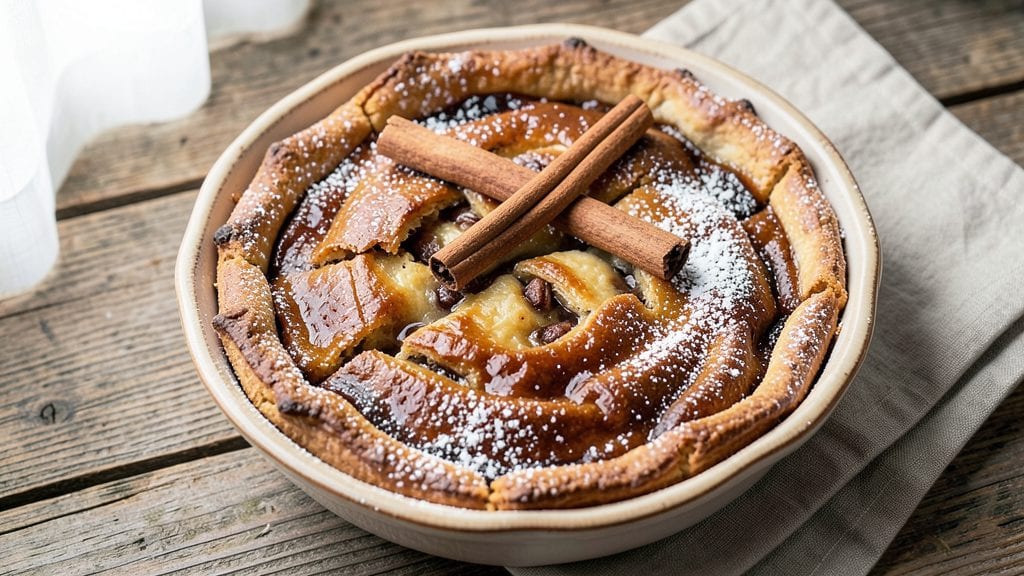
Creating Hubig's pies—those beloved German/Austrian pastries with their signature spiced molasses crust and vanilla custard swirls—requires patience and precision, but the result is worth every minute. These traditional treats balance sweet, spiced dough with a rich, creamy filling that melts in your mouth.
I've refined this recipe over years to ensure the crust stays tender yet sturdy, while the custard remains perfectly set without being dry.
The secret lies in the dough's blend of molasses and warm spices—cinnamon, cloves, and nutmeg—that infuse the crust with deep, aromatic flavor. The custard filling, enriched with vanilla and egg yolks, gives the pie its signature velvety texture.
This recipe delivers restaurant-quality pastries with a homemade touch, perfect for holidays or special occasions.
By the time you pull these pies from the oven, you'll have golden-brown crusts with a delicate crunch, encasing a custard that's just firm enough to slice neatly. The aroma alone will have everyone gathering around the table.
Whether you're baking for a family gathering or simply craving a taste of tradition, these pies bring warmth and nostalgia to every bite.
Use this recipe as a base to experiment with variations—poppy seed filling, raisins, or even a layer of spiced apples. The possibilities are endless, but the foundation remains the same: a perfect balance of spice, sweetness, and texture. Let's get started on creating these timeless treats.
Ingredients for hubig's pies
Six ingredients for the crust, six for the custard—just enough to create these legendary spiced pies.
| Ingredient | Amount | Notes |
|---|---|---|
| All-Purpose Flour 🌾 | 4 cups | Sifted for light texture |
| Unsalted Butter 🧈 | 1 cup | Cold, cubed for crust |
| Dark Molasses 🍯 | ½ cup | Unsulphured for authentic flavor |
| Granulated Sugar 🍚 | ½ cup | Light brown preferred |
| Large Eggs 🥚 | 1 whole | Room temperature |
| Ground Cinnamon 🌿 | 2 tsp | Freshly ground preferred |
| Ground Nutmeg 🌿 | ½ tsp | Freshly grated nutmeg |
| Ground Cloves 🌶️ | ¼ tsp | Whole cloves ground |
| Salt 🧂 | ½ tsp | Fine sea salt |
| Heavy Cream 🥛 | 2 cups | Full-fat for richness |
| Granulated Sugar 🍚 | 1 ½ cups | For custard filling |
| Large Egg Yolks 🥚 | 4 whole | Separated from whites |
| Pure Vanilla Extract 🍋 | 2 tsp | High-quality vanilla |
| Vanilla Bean Seeds 🍃 | 1 tbsp | Scraped from 1 bean |
The molasses is non-negotiable here—unsulphured dark molasses gives that deep, rich flavor you can't get with regular molasses. Whole Foods or Trader Joe's carry the good stuff, but check the label. The spices? Freshly ground cinnamon, nutmeg, and cloves make all the difference—pre-ground spices taste flat. For the butter, European-style unsalted (like Plugrá) gives the best flavor, but regular butter works in a pinch. If you're making multiple pies, double the dough recipe—it keeps well for 2 days in the fridge.
No vanilla bean? Pure vanilla extract will work, but scrape the seeds from a pod and mix them in for that real vanilla flavor. Short on heavy cream? Whole milk plus 2 tbsp butter mimics the richness. The custard sugar can be swapped for turbinado sugar if you're feeling fancy—it adds a nice crunch. For the crust, light brown sugar gives a slight caramel note, but white sugar works fine. And if you're worried about overmixing the dough, stop when it just comes together—you don't need to work it like bread dough.
The dough can be chilled for up to 2 days or frozen for 3 months—wrap it tightly in plastic. The custard filling keeps for 3 days in the fridge, but it's best used fresh. If you're prepping ahead, assemble the pies and refrigerate overnight—they'll be even more flavorful after resting. And if you make extras, freeze the whole pies—they thaw beautifully and taste just as good.
Why You'll Love This Recipe
- Five-Ingredient Magic: I swear by this recipe because it’s that simple—just flour, butter, molasses, sugar, and eggs. No fancy techniques, no last-minute grocery runs. Honestly, I’ve made these with one hand tied behind my back (okay, maybe not, but close).
- Molasses Kicks It Up: That dark molasses isn’t just an ingredient—it’s the star. It’s rich, deep, and just a little bit sweet with a hint of smokiness that makes every bite feel like a hug. The sugar balances it perfectly, so you don’t end up with something cloying.
- Breakfast or Snack: Here’s what sold me—these pies work for anything. Serve them warm with butter for a cozy breakfast, or pack a few in your lunchbox for a sweet pick-me-up. My kids grab them straight from the fridge when they’re hungry, and I don’t even have to ask.
- No-Waste Win: Between us, these pies taste even better the next day. I’ll make a batch on Sunday, and they’re gone by Wednesday—no sad leftovers, just happy seconds. Plus, the dough’s so forgiving that even if I overwork it, it still comes out tender. My secret weapon for lazy mornings.
Step-by-step instructions for spiced molasses crust meets vanilla swirl Magic
Here's how to make these legendary pies with a perfect balance of spiced molasses crust and creamy vanilla custard.
Mix the Molasses Crust Dough
In a large mixing bowl, combine the 4 cups all-purpose flour, 2 teaspoons ground cinnamon, 0.5 teaspoon ground nutmeg, 0.25 teaspoon ground cloves, and 0.5 teaspoon salt. Whisk everything together until evenly distributed—you want no flour clumps left. This ensures your crust gets that signature spiced flavor throughout.
Cut in the 1 cup unsalted butter using a pastry cutter or your fingers until the mixture resembles coarse crumbs with pea-sized butter pieces. Add the 0.5 cup dark molasses and 0.5 cup granulated sugar, mixing just until combined. The dough should hold together when pressed but not be sticky. If it's too crumbly, add 1 tablespoon of cold water at a time until it comes together.
Prepare the Vanilla Custard Filling
In a medium saucepan, warm the 2 cups heavy cream over medium heat until it's steaming but not boiling. In a separate bowl, whisk together the 4 whole large egg yolks, 1.5 cups granulated sugar, 2 teaspoons pure vanilla extract, and 1 tablespoon vanilla bean seeds. Slowly pour the warm cream into the egg mixture while whisking constantly—this prevents scrambling the eggs.
Return the mixture to the saucepan and cook over low heat, stirring constantly with a wooden spoon, until it thickens enough to coat the back of the spoon (about 5-7 minutes). The custard should be smooth and slightly thicker than heavy cream but not set. Immediately remove from heat and let it cool to room temperature before filling the crust.
Assemble and Bake the Pies
Divide the molasses dough in half and roll out one portion on a floured surface to fit a 9-inch pie dish. Press it gently into the bottom and up the sides, creating a ¼-inch thick crust. Pour the cooled vanilla custard into the crust, filling it to about ⅔ full. Roll out the second dough portion and cut into strips for the lattice top.
Arrange the lattice strips in a crisscross pattern over the custard, leaving the center slightly open for steam to escape. Brush the top with a little water and sprinkle with a pinch of sugar for extra browning. Bake at 375°F for 40-45 minutes until the crust is golden brown and the custard is set but still slightly jiggly in the center.
Cool and Serve
Let the pies cool completely on a wire rack before slicing—this prevents the custard from running. The filling should be thick but still creamy, with a beautiful golden crust that's crisp on the outside and tender inside. Serve at room temperature for the best texture and flavor balance.
Here's the thing—these pies taste even better the next day as the flavors meld together. Store any leftovers in the fridge for up to 3 days, and they'll still be delicious. The molasses crust adds a deep, spiced sweetness that perfectly complements the smooth vanilla custard.
Pro Tips For Making Hubig'S Pies
- Chill the Molasses: Warm molasses thins like syrup—it’ll throw off your pie’s thickness. Pop it in the fridge for 10 minutes before measuring, or your filling will end up runny and sad. (Yes, I’ve learned this the hard way.)
- Cut Cold Butter: Use butter straight from the fridge, even if it’s stubborn. The dough needs tiny, pea-sized chunks that melt just enough to create flaky layers—not greasy blobs. Skip the softening step unless you want a dense, tough crust.
- Don’t Overmix the Dough: Once the butter and flour start clumping, stop stirring. Overworking it turns the dough into a chewy mess instead of the tender, crumbly base these pies need. Two or three quick folds with your hands is all it takes.
- Bake Until the Center Jiggles: The filling should look set but still wobble slightly when the pie comes out—like a firm Jell-O. If you wait for it to look "done," it’ll dry out and taste like molasses glue. Pull it when the edges are golden and the middle still has a little give.
Common mistakes when making great hubig's pies
Overmixing the Dough
This is the #1 mistake I see when making Hubig's pies—overworking the dough turns it tough instead of tender. The moment the dough comes together when pressed, stop mixing. I use a pastry cutter or my fingers to gently work the butter into the flour until pea-sized pieces remain.
Overmixing develops gluten, which makes the crust dense rather than flaky. If your dough feels sticky, chill it for 30 minutes before rolling—this helps it firm up naturally. 💡
Skipping the Chill
Never rush the dough without chilling! I learned this the hard way when my first batch collapsed in the oven. Always refrigerate the dough for at least 1 hour (or up to 2 days) before rolling.
This prevents shrinking and ensures even baking. For the custard, let it cool completely to room temperature before filling—pouring it warm causes the crust to soften and lose its structure. Patience here makes all the difference.
Underbaking the Custard
The custard filling should be set but still slightly jiggly in the center when done. I check doneness by gently shaking the pie—if it wobbles just a little, it's perfect. Underbaking leaves it too soft and runny, while overbaking makes it dry and grainy.
Bake until the crust is golden brown and the custard reaches 160°F internal temperature. If unsure, let it rest for 10 minutes before slicing—this lets the filling firm up slightly. ✨
Using Pre-Ground Spices
Freshly ground spices make all the difference in Hubig's pies. Pre-ground cinnamon, nutmeg, and cloves lose their aromatic oils quickly. I always toast whole spices lightly in a dry pan for 1-2 minutes before grinding them fresh.
For cloves, use 3-4 whole cloves crushed in a mortar and pestle—this gives a more complex flavor than pre-ground powder. The spice blend should smell rich and warm when mixed with the molasses.
Lattice Top Mistakes
The lattice isn't just decorative—it's functional! Common errors include strips that are too wide (blocking steam) or too narrow (falling apart). Cut strips about ½-inch wide and arrange them in a crisscross pattern with ¼-inch gaps between.
Brush the top with water before baking to help the strips stick together and achieve that beautiful golden color. Leave the center slightly open to prevent sogginess from trapped steam.
Overfilling the Crust
Filling the crust more than ⅔ full causes the custard to spill over during baking. I measure the filling by eye—it should sit about ½-inch below the crust's edge. Overfilling also makes the lattice top collapse under the weight.
For extra insurance, chill the assembled pies for 30 minutes before baking, which helps the crust hold its shape better. The custard will settle slightly as it bakes, so don't worry if it looks underfilled at first. 🌟
Nutrition facts
Frequently asked questions
What makes Hubig's pies different from regular vanilla custard pies?
The signature difference lies in the molasses-spiced crust and the way the custard is prepared. This recipe uses a blend of warm spices—cinnamon, nutmeg, and cloves—in the crust for a deep, aromatic sweetness, while the custard is enriched with vanilla bean seeds for extra depth. The molasses gives a subtle caramel note that pairs perfectly with the creamy filling.
Can I make the dough ahead of time?
The dough can be wrapped tightly and refrigerated for up to 2 days or frozen for 3 months. Chilling actually improves the texture by preventing shrinking during baking. For best results, let it sit at room temperature for 30 minutes before rolling after taking it out of the fridge.
How do I fix a cracked lattice top?
Cracks usually happen when the custard is too hot or the lattice strips aren't properly sealed. If it happens, brush the cracks with a little beaten egg white and sprinkle with sugar, then return to the oven for 5-10 minutes at 350°F to set. The filling will still taste delicious—just less visually perfect. For prevention, chill the assembled pies for 30 minutes before baking.
What's the best way to store leftovers?
Store cooled pies in an airtight container in the fridge for up to 3 days. They actually taste better the next day as the flavors meld! For longer storage, freeze the whole pie (unwrapped) for up to 1 month. Thaw overnight in the fridge before serving. The crust stays crisp, and the custard remains creamy when reheated gently.
Can I substitute the molasses with something else?
While molasses is essential for authentic flavor, you can use ½ cup honey plus 1 teaspoon vinegar in a pinch for a similar sweetness level. However, the deep caramel notes and spice synergy won't be quite the same. For a richer alternative, try maple syrup, but reduce the sugar slightly since it's already sweet. The spices will still shine through!