
Desserts
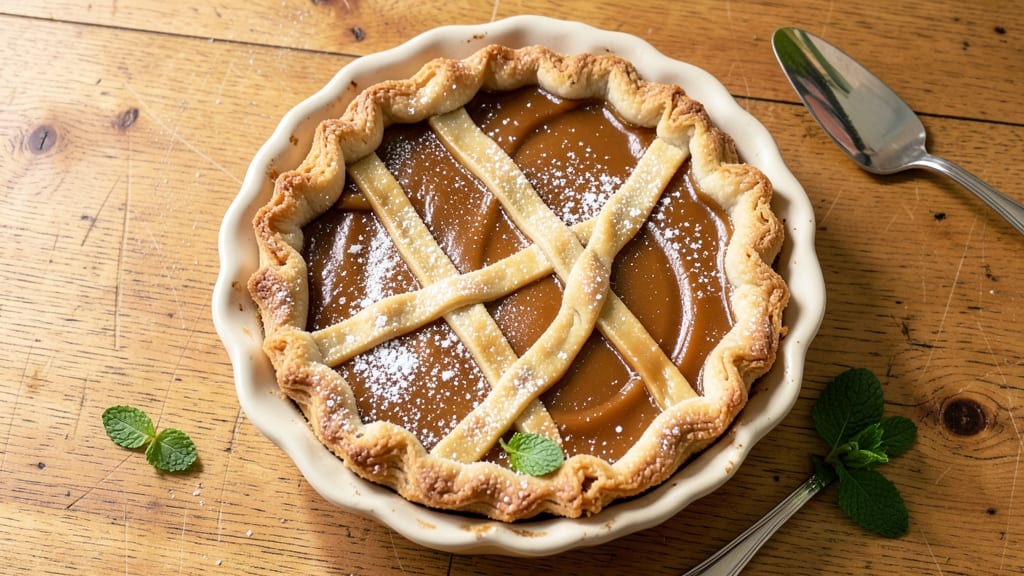
This Grandma's Old-Fashioned Sugar Pie Recipe brings back the comforting flavors of childhood—vanilla-spiced filling encased in a golden, buttery lattice crust that cracks just enough to reveal the creamy center.
The secret lies in the slow-cooked custard, where cornstarch and vanilla transform into a silky, spiced filling that’s neither too sweet nor too bland. I first learned this recipe from my grandmother, who insisted the lattice wasn’t just decorative but essential for that perfect balance of texture and aroma.
The magic happens in layers: a flaky, all-butter crust that holds its shape while baking, and a filling so rich it makes every slice worth savoring. The lattice pattern isn’t just for looks—it creates a delicate, crispy network that contrasts beautifully with the soft custard beneath.
This pie isn’t just dessert; it’s a centerpiece, the kind that disappears faster than you can say "seconds, please?"
What makes this recipe special is its simplicity paired with professional results. No fancy techniques—just precise measurements, a slow bake to avoid cracking, and a lattice crust that’s easier to assemble than you’d think. The filling stays creamy, the crust stays crisp, and the vanilla flavor shines through without overpowering.
Serve it warm with a scoop of vanilla ice cream or a dollop of whipped cream, and you’ll understand why this pie has been a family tradition for generations.
Perfect for holidays, Sunday dinners, or whenever you crave a taste of nostalgia. The aroma alone will have everyone gathering in the kitchen, and the first bite will remind them why homemade dessert always tastes better. Let’s get baking—this pie is worth every minute of the wait.
Ingredients for grandma's old fashioned sugar pie
Buttery crust, spiced custard, and a lattice that cracks just right—here’s what you’ll need.
| Ingredient | Amount | Notes |
|---|---|---|
| All-Purpose Flour 🌾 | 2 ½ cups | Sifted for flaky texture |
| Unsalted Butter 🧈 | 1 cup | Cold, cut into cubes |
| Granulated Sugar 🍚 | 1 ½ cups | Superfine preferred |
| Vanilla Extract 🌸 | 2 tbsp | Pure, high-quality |
| Large Eggs 🥚 | 4 whole | Room temperature |
| Cornstarch 🌾 | ½ cup | For smooth filling |
| Whole Milk 🥛 | 1 ½ cups | Full-fat for creaminess |
| Ground Cinnamon 🌿 | 1 tsp | Freshly ground preferred |
| Ground Nutmeg 🌿 | ¼ tsp | Freshly grated |
| Salt 🧂 | ½ tsp | Fine sea salt |
| Vanilla Bean Seeds 🌸 | 1 tbsp | Scraped from 1 pod |
| Heavy Cream 🥛 | ½ cup | For lattice richness |
| Vanilla Ice Cream 🍦 | 1 ½ cups | For serving |
The butter is non-negotiable—European-style or Plugrá for extra flakiness. Grab it from Whole Foods or your local specialty shop if you can; the higher fat content makes all the difference. Vanilla matters too—Madagascar bourbon or Tahitian extracts add depth, but pure vanilla bean seeds (scraped from a pod) take it to another level. I always buy extra because once you try real vanilla, store-bought extract feels like a compromise. For the cinnamon, Penzeys or bulk bins have the freshest ground spice—it’s worth the extra few cents.
No superfine sugar? Pulse regular granulated in a food processor for 30 seconds—it’ll work just fine. Running short on vanilla extract? Vanilla bean paste works in a pinch, but reduce the amount by half since it’s more concentrated. The milk can be skim or whole, but full-fat heavy cream in the filling makes the custard silkier. For the lattice, store-bought pie crust (like Pillsbury) is a secret weapon—just brush it with egg wash and cut the slits yourself. Trust me, it’s foolproof.
The filling keeps for 3 days in the fridge if you make it ahead, but the crust is best fresh. Wrap the unbaked pie in plastic and refrigerate overnight for easier handling. Leftover slices reheat beautifully—just pop them in a 350°F oven for 5-10 minutes until the lattice is crisp again. The ice cream should be vanilla bean or bourbon pecan—anything with vanilla flavor to echo the pie’s spice. Portion it out in advance so you’re not scrambling when guests arrive.
Why You'll Love This Recipe
- The secret’s in the layers: that flaky crust buttery enough to melt in your mouth, then the custard—smooth, lightly sweetened, with vanilla cutting through like a whisper. It’s not overly sweet, just right—like a hug in dessert form.
- Just Five Ingredients: I swear, this pie only needs flour, butter, sugar, eggs, and vanilla—no fancy substitutions or hard-to-find spices. That crust? Just butter and flour, rolled out in minutes. Honestly, if you can crack an egg, you can make this.
- Butter-Sugar Magic: The secret’s in the layers: that flaky crust buttery enough to melt in your mouth, then the custard—smooth, lightly sweetened, with vanilla cutting through like a whisper. It’s not overly sweet, just right—like a hug in dessert form.
- Weeknight or Holiday: I’ve served this to tired parents at potlucks and as the centerpiece of Thanksgiving. The same simple recipe works for a quick family dinner or a showstopper dessert. Between us, it’s the one pie that never feels like too much effort.
Step-by-step instructions for grandma's old-fashioned sugar pie
Here's how to make this classic dessert with a buttery lattice crust and spiced vanilla filling.
Prepare the Vanilla Filling
In a medium saucepan, combine the 1.5 cups whole milk and 1.5 cups granulated sugar over medium heat. Stir until the sugar dissolves completely, then add the 1 tbsp vanilla bean seeds and 2 tbsp vanilla extract. Bring to a gentle simmer, stirring constantly to prevent scorching.
In a separate bowl, whisk together the 4 whole large eggs and 0.5 cup cornstarch until smooth. Slowly pour the egg mixture into the simmering milk while whisking vigorously to prevent curdling. Return the mixture to the heat and cook for 5-7 minutes, stirring constantly, until it thickens enough to coat the back of a spoon. Remove from heat and stir in the 1 tsp ground cinnamon, 0.25 tsp ground nutmeg, and 0.5 tsp salt. Let cool to room temperature before pouring into the pie crust.
Make the Pie Crust Dough
In a large bowl, combine the 2.5 cups all-purpose flour and 0.5 tsp salt. Cut in the 1 cup unsalted butter (cold, cut into cubes) using a pastry cutter or your fingers until the mixture resembles coarse crumbs. Gradually add 0.5 cup ice water, 1 tablespoon at a time, mixing just until the dough comes together. Form into a disk, wrap in plastic, and chill for at least 1 hour (or up to 2 days).
Roll out the chilled dough on a floured surface to fit a 9-inch pie dish, trimming excess edges. Fold the edges inward to create a double-thick crust, then crimp decoratively. Prick the bottom with a fork to prevent bubbling. Preheat your oven to 375°F and bake the crust for 15 minutes before filling.
Assemble and Bake the Pie
Pour the cooled filling into the pre-baked crust. Roll out the remaining dough and cut into strips about 1/4-inch wide. Arrange strips in a lattice pattern over the filling, sealing edges by pressing strips together. Brush the lattice with a mixture of 0.5 cup heavy cream and 1 tablespoon milk for a golden finish. Bake at 375°F for 40-45 minutes, until the filling is set and the crust is golden brown.
Remove from the oven and let cool completely on a wire rack. The pie will continue to firm up as it cools. Serve with 1.5 cups vanilla ice cream for the ultimate old-fashioned treat.
Pro Tips For Making Grandma'S Old Fashioned Sugar Pie
- Chill the Dough: After mixing your flour, butter, and sugar into that thick, crumbly dough, pop it in the fridge for at least 30 minutes—yes, even if you’re impatient like me. I used to skip this and ended up with a pie crust that spread like wildfire in the oven, leaving me with a sad, thin ring instead of the sturdy base grandma’s recipe promises.
- Whisk Eggs Like It Matters: Beat those eggs until they’re pale, thick, and ribbon when you lift the whisk—this isn’t the time to half-ass it. I learned this the hard way when my pie filling turned out grainy instead of silky smooth. A hand mixer makes this easier, but elbow grease works too if you’re old-school.
- Skip the Overmixing: Once you add the flour to your wet ingredients, stop stirring the second everything comes together. Overmixing develops gluten, and your pie filling will turn out tough instead of tender. Two or three turns of a spatula is all you need—trust me, your future self will thank you.
- Bake Until the Center Jiggles: Don’t pull the pie out the second the edges look set. The center should still wobble slightly when you shake the pan—this ensures it’s creamy, not rubbery. I used to take it out too early, and the filling would end up like dessert Jell-O. Patience here pays off.
Pro cooking tips for grandma's old fashioned sugar pie
Filling Thickening Secrets
Cornstarch is your best friend here—it thickens the custard smoothly without making it gluey. Whisk the egg mixture vigorously while pouring it into the hot milk to prevent curdling. I use a hand mixer on low speed for this step—it’s faster and more consistent than whisking by hand.
Once thickened, the filling should coat the back of a spoon but still glide off easily. If it’s too thin, cook it 1-2 more minutes over low heat. 🌡️
Lattice Perfection
Cutting the lattice strips takes practice, but a sharp pizza cutter makes it easier. Arrange them in a classic crisscross pattern, pressing the edges together to seal the filling inside. For extra crispiness, brush the lattice with a mix of ½ cup heavy cream and 1 tbsp milk before baking.
This also adds a subtle richness that complements the vanilla. Don’t overcrowd the strips—leave ¼-inch gaps for even baking.
Preventing Cracks
Cracking happens when the filling cools too quickly or the oven isn’t hot enough. Bake the crust first to create a sturdy base, then fill it with the room-temperature custard. Place the pie on the middle rack of your oven—this ensures even heat distribution.
If you notice cracks forming, tent the pie with aluminum foil for the last 10 minutes of baking to slow the process. The lattice should crack naturally as it cools, revealing the golden custard beneath. ✨
Buttery Crust Tips
Cold butter is non-negotiable for flaky layers. Cut it into ½-inch cubes and keep them frozen until you’re ready to mix. Use a pastry cutter or your fingers to work the butter into the flour until you get pea-sized crumbs—this ensures even distribution.
Overmixing the dough leads to tough crusts, so handle it as little as possible. Chill the dough for at least 1 hour before rolling to prevent shrinking.
Slow Baking for Creaminess
Patience is key here. Bake the pie at 375°F for 40-45 minutes, but don’t rush it—undercooking leaves the filling too soft, while overbaking dries it out. The edges should be golden, and the center should jiggle slightly when shaken.
Let the pie cool completely on a wire rack before slicing—this allows the filling to set properly. If you can’t wait, serve it warm with ice cream, but the texture will be slightly softer. 🍦
Vanilla Boost
Don’t skimp on the vanilla. Scrape the seeds from a Madagascar bourbon vanilla bean and add them to the milk while heating—this infuses the filling with deep, aromatic flavor. For extra richness, add 1 tbsp vanilla bean paste to the cooled custard before pouring it into the crust.
The paste blends seamlessly and adds layers of complexity that plain extract can’t match. Freshly grated nutmeg and cinnamon should be added just before baking to preserve their aroma. 🌸
Nutrition facts
Frequently asked questions
Why does the lattice crust crack in this sugar pie?
The lattice cracks naturally as it cools, revealing the golden custard beneath—that's actually part of the charm! To minimize unwanted cracks, bake the crust first to create a sturdy base, use room-temperature filling, and avoid opening the oven door during baking. The classic cracking happens when the lattice cools and contracts, but a properly baked pie should only crack in the lattice, not the filling.
Can I make this pie ahead of time?
This pie tastes even better the next day. Assemble the pie completely (including the lattice) and refrigerate it overnight before baking. The cold dough will be easier to handle, and the pie will have deeper flavors. For maximum freshness, bake and serve within 24 hours—just store it at room temperature for up to 4 hours before slicing.
What's the secret to the creamy custard filling?
The magic is in the cornstarch and slow cooking. Whisk the egg mixture vigorously while pouring it into the hot milk to prevent curdling, and cook until the filling coats the back of a spoon but still glides off easily. For extra richness, use full-fat milk and heavy cream, and let the filling cool completely before pouring it into the crust. The slow bake at 375°F helps create that signature creamy texture.
Can I substitute regular pie crust for the lattice?
Yes, but the lattice adds a beautiful texture and visual appeal. If you prefer a simpler approach, use a single pie crust and cut decorative slits in the top before baking. For a shortcut, roll out the second crust, cut it into strips, and arrange them in a lattice pattern—it's easier than it looks! The key is to seal the edges properly to keep the filling contained.
How do I store leftover sugar pie?
Store the pie in an airtight container at room temperature for up to 3 days, or refrigerate for up to 5 days. To reheat slices, warm them in a 350°F oven for 5-10 minutes until the lattice is crisp again. For longer storage, freeze individual slices wrapped in plastic wrap for up to 2 months—thaw at room temperature before serving.