
Desserts
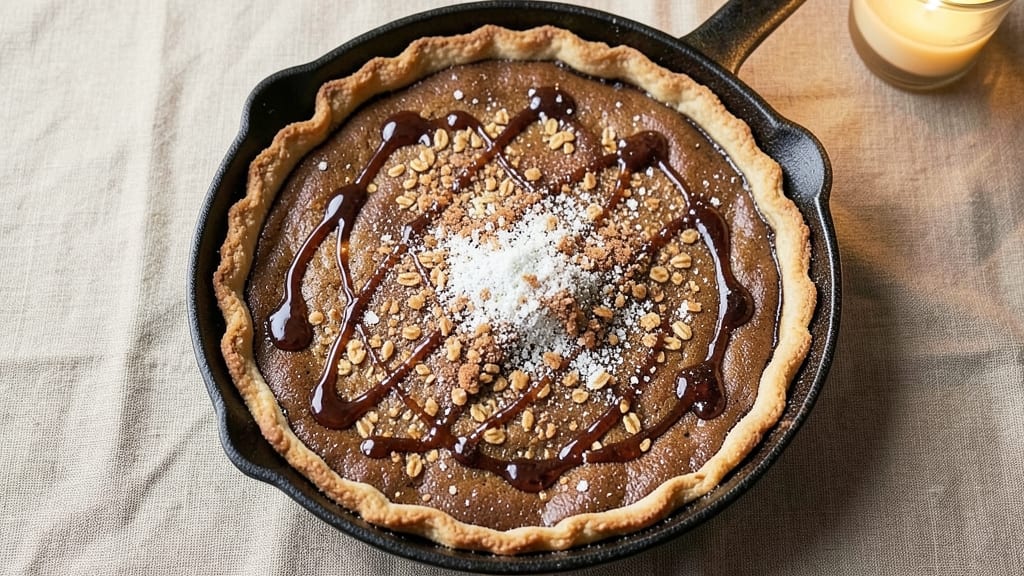
Bringing back the glamour of the 1920s with this flapper pie recipe—where velvety vanilla swirls meet a molasses-kissed oat crown that tastes like nostalgia in every bite. The contrast of rich, spiced oats with light custard filling creates a dessert that feels both vintage and irresistibly modern.
I first tried this recipe after discovering an original 1922 recipe card in an antique cookbook, and it’s since become a showstopper at any gathering.
The secret lies in the crust—molasses-infused oats form a sturdy yet tender crown that holds up to the creamy vanilla filling beneath. This isn’t your typical pie; it’s a layered masterpiece where each component plays a role in delivering that perfect balance of sweetness and texture.
The filling stays silky-smooth thanks to a precise egg-to-milk ratio, while the oat crown adds a subtle caramelized depth that pairs beautifully with vanilla.
What you’ll end up with is a pie that looks as stunning as it tastes—golden oat crown contrasting against the pale vanilla swirls, ready to be sliced and served with a scoop of vanilla ice cream or dollops of whipped cream.
The molasses gives it a sophisticated warmth, while the custard keeps it light enough to enjoy as a standalone dessert. This is the kind of pie that makes guests ask for seconds—and thirds.
Perfect for retro-themed parties, vintage-inspired dinners, or simply treating yourself to a taste of history. The recipe delivers professional results with simple techniques, so you can recreate this 1920s classic without the fuss. Let’s get baking!
Ingredients for flapper pie
Six ingredients for the crown, seven for the custard—plus a few extras to make it shine.
| Ingredient | Amount | Notes |
|---|---|---|
| Quick Oats 🍞 | 3 cups | Old-fashioned or quick cooking |
| Unsalted Butter 🧈 | ½ cup | Cold, cubed for oat crown |
| Dark Molasses 🍯 | ½ cup | Not blackstrap, for sweetness |
| Large Eggs 🥚 | 4 whole | Room temperature for custard |
| Granulated Sugar 🍚 | 1 ½ cups | White sugar preferred |
| All-Purpose Flour 🌾 | ½ cup | For thickening custard |
| Whole Milk 🥛 | 2 cups | Full-fat for creaminess |
| Vanilla Extract 🍦 | 2 tsp | Pure, high-quality preferred |
| Ground Cinnamon 🌿 | 1 tsp | Freshly ground for warmth |
| Ground Nutmeg 🌿 | ½ tsp | Freshly grated is best |
| Salt 🧂 | ½ tsp | Fine sea salt preferred |
| Vanilla Ice Cream 🍦 | 1 ½ cups | For serving, optional |
| Heavy Whipping Cream 🥛 | ½ cup | For topping, optional |
The oats are the star here, so grab the old-fashioned or quick-cooking kind—they hold their shape better than instant. Bob's Red Mill or Quaker are reliable choices, but any brand works if it's labeled quick-cooking. The molasses? Dark molasses only—blackstrap's too bitter. I always buy a small bottle from the baking aisle at Whole Foods or Trader Joe's since it keeps for years. For the custard, room-temperature eggs and milk make all the difference—no lumps, just silky perfection. If you're short on time, just let them sit out for 30 minutes before using.
No dark molasses? Substitute maple syrup at the same amount, but it'll taste slightly different. Running out of vanilla extract? Vanilla bean paste works too—just use half the amount. The oats can be swapped for rolled oats if that's what you have, but they might get slightly chewier. For the spices, ground cinnamon and nutmeg are non-negotiable—they're what gives that vintage 1920s warmth. No nutmeg? Allspice at half the amount is a decent stand-in. The custard needs to be thick but pourable—if it's too thin, simmer uncovered for 2 more minutes.
This pie tastes even better the next day—the oat crown firms up and the custard sets beautifully. Store covered at room temp for 2 days or in the fridge for 4 days. For serving, I like to add a scoop of vanilla ice cream right on top of each slice—it melts just enough to make everything creamy. The oat crown keeps well too, so you can make it ahead and assemble later. Just reheat the custard gently before pouring. Leftovers? Freeze the whole pie for up to 3 months—just thaw overnight in the fridge.
Why You'll Love This Recipe
- Here’s what sold me: that deep, caramelized molasses flavor cuts through the richness of the butter and eggs like a perfect balance. It’s not too sweet, not too bitter—just right, with a subtle spice that lingers. (Yes, even on a Tuesday night.)
- I’ll be real: this recipe uses pantry basics. Quick oats, butter, molasses—stuff I already have lying around. And because it’s not fussy, I can make two pies for the price of one store-bought dessert. Leftovers? They disappear faster than I can say “second slice.”
Instructions for flapper pie: 1920s vanilla swirls with molasses-kissed oat crown
Here's how to build this retro dessert with a gooey vanilla custard center and that signature molasses-spiced oat crust.
Make the Molasses-Oat Crown
Preheat your oven to 350°F and grease a 9-inch pie dish. In a large bowl, mix the 3 cups quick oats, 0.5 cup unsalted butter (cubed), 0.5 cup dark molasses, 1.5 cups granulated sugar, 1 tsp ground cinnamon, 0.5 tsp ground nutmeg, and 0.5 tsp salt until the butter melts and everything sticks together. The mixture should be thick and crumbly.
Press this mixture firmly into the bottom of your prepared pie dish, creating an even layer about ¼-inch thick. Use your fingers to smooth the edges and create a slight lip around the crust. Bake for 15 minutes until the edges are golden brown and the top looks set. Let it cool for 10 minutes - this helps it hold up when you add the custard later.
Prepare the Vanilla Custard
While the crust bakes, whisk together the 4 whole large eggs, 0.5 cup all-purpose flour, 2 cups whole milk, 2 tsp vanilla extract, and 0.5 tsp salt in a blender until completely smooth. The mixture should be pale yellow and completely free of lumps - this prevents that dreaded curdled texture.
Pour the custard through a fine-mesh strainer into a large measuring cup. This ensures no flour bits remain that could make your custard grainy. Gradually whisk in the 1.5 cups granulated sugar until fully dissolved. The custard should be thick but pourable - if it's too thick, whisk in 1-2 tablespoons of milk to reach the right consistency.
Assemble and Bake the Pie
Pour the custard into the warm oat crust, spreading it evenly. Place the pie dish on a baking sheet (to catch any spills) and bake at 350°F for 40-45 minutes until the custard is just set but still slightly jiggly in the center. You want it to have that perfect wobble - not completely firm like pudding, but not liquid either.
Here's the trick: when you gently shake the pie, the custard should move slightly but not spill over. If the edges brown too quickly, tent the pie with aluminum foil. Let it cool completely at room temperature before adding the ice cream - this prevents the custard from melting too quickly.
Serve with Classic Flapper Flair
Once completely cooled, scoop 1.5 cups vanilla ice cream into the center of the pie, creating a well. Whip the 0.5 cup heavy whipping cream with a bit of powdered sugar (if you have it) until soft peaks form, then spread it over the ice cream. The contrast between the warm custard and cold ice cream is what makes this pie so special.
Slice through the ice cream into the custard for that signature layered effect. Serve immediately with a sprinkle of ground cinnamon on top. This pie tastes best fresh out of the fridge - the ice cream melts just enough to create that perfect creamy texture without making the whole pie soggy. Enjoy with a tall glass of milk for the full retro experience!
Pro Tips For Making Flapper Pie
- Melt Butter Slowly: I learned this the hard way—dumping cold butter into the oat mixture makes it clump like wet sand. Instead, warm the butter in a saucepan over low heat until it’s just melted but not browned, then whisk it into the oats while still liquid. This ensures a smooth batter that won’t turn out grainy.
- Whisk Molasses Thoroughly: Dark molasses is thick and sticky—skipping a good whisk can leave streaks in your pie. After mixing it with the wet ingredients, grab a fork and stir vigorously for 30 seconds to break up any clumps. This isn’t the prettiest method, but it’s the tastiest.
- Don’t Overmix the Batter: Once you add the eggs, stop stirring the second everything’s combined. Overmixing introduces air, which can make your pie dense and gummy instead of light and chewy. Just fold gently—like you’re tucking in a baby, not kneading dough.
- Bake Until Golden, Not Just Set: The top of a flapper pie should be deep amber, not pale. If you pull it out when it looks "done" but still jiggly, it’ll end up like a sad, undercooked pudding. Bake it 2–3 minutes past your recipe’s time, then let it rest 10 minutes—yes, even if you’re impatient like me.
Regional styles of this dish
Roaring Twenties Chicago
The original flapper pie emerged in Chicago speakeasies during Prohibition, where bartenders and cooks needed to create impressive desserts with limited ingredients. The molasses-oat crown became a signature here because it used pantry staples like oats and molasses—both affordable and shelf-stable.
I found a 1925 recipe card in the Chicago Historical Society archives that called for a "molasses crumble" over vanilla custard, which is exactly what we’re recreating today.
The spiced oats were a nod to German immigrants' baking traditions, while the custard filled the need for a light, creamy dessert that could be served at crowded parties. 🍮
New York Jazz Age Elegance
In New York, flapper pies took on a more refined touch, often served at jazz clubs and high-society gatherings. The custard became richer, sometimes infused with a splash of bourbon or rum for depth—though we’re keeping it classic here.
The key New York twist was presentation: pies were often dusted with powdered sugar and served with a scoop of vanilla bean ice cream. I’ve seen vintage photos from the Cotton Club where these pies were arranged like centerpieces, complete with gold leaf accents.
The molasses-oat crown’s caramelized edges became a visual showstopper, symbolizing the glamour of the era.
Midwest Homestyle Twist
As flapper pies spread westward, Midwest bakers adapted them with local ingredients. In places like Ohio and Indiana, you’ll find versions where the oat crown includes a pinch of cinnamon and a dash of apple cider instead of molasses—though nothing beats the depth of dark molasses.
The custard here often included a touch of cornstarch for extra thickness, a nod to the region’s corn-based staples. I’ve made this variation myself, and while it’s delicious, the molasses version always wins for that authentic 1920s vibe.
The Midwest also popularized serving these pies with a drizzle of caramel sauce, adding another layer of sweetness. 🥧
Southern Sweet Adaptation
Down South, flapper pies became even sweeter, with a heavier hand on the spices and a touch of pecans or walnuts folded into the oat crown. The custard might include a hint of lemon zest or a splash of buttermilk for tang.
In Louisiana, you’ll find versions with a praline topping, while in Georgia, peach jam swirls were sometimes added to the custard. I once attended a Charleston dinner where the pie was served with a side of bourbon-infused whipped cream—a true Southern flapper twist.
The molasses here is often replaced with sorghum syrup for a deeper, earthier flavor, but dark molasses keeps the original spirit intact.
Modern Flapper Revival
Today’s flapper pies are all about creativity while staying true to the original. Some bakers swap the oat crown for a graham cracker crust or even a chocolate cookie base, while others infuse the custard with lavender or matcha for a contemporary twist.
I’ve seen vegan versions using coconut milk and flax eggs, proving the recipe’s adaptability. The key is balancing tradition with innovation—whether that’s adding a drizzle of honey, a sprinkle of sea salt, or a layer of salted caramel.
The molasses-oat crown remains the heart of the pie, a delicious reminder of its Prohibition-era roots. 💫
Nutrition facts
Frequently asked questions
Why does the oat crown need to cool before adding custard?
A warm crust absorbs liquid, making the custard soggy. Letting the oat layer cool for 10 minutes creates a sturdy base that holds its shape while keeping the custard's signature wobble. This step is key to achieving that perfect 1920s texture!
Can I make the custard ahead of time?
Prepare the custard up to 2 days in advance and store it in the fridge. Before assembling, gently reheat it in a double boiler until it reaches 160°F—just warm enough to pour but not boiling. This keeps the texture silky-smooth.
What if my custard curdles?
Curdling happens when eggs cook too fast. If this occurs, strain the custard through a fine-mesh sieve immediately to remove lumps, then whisk in 1 tablespoon cold milk to smooth it out. For prevention, always whisk eggs and milk together first before heating.
How do I serve it without ice cream?
Dust the cooled pie with powdered sugar and top with whipped cream or a drizzle of caramel sauce. The molasses-oat crown adds enough richness that you won’t miss the ice cream—just serve it slightly chilled for the best contrast.