
Main Courses
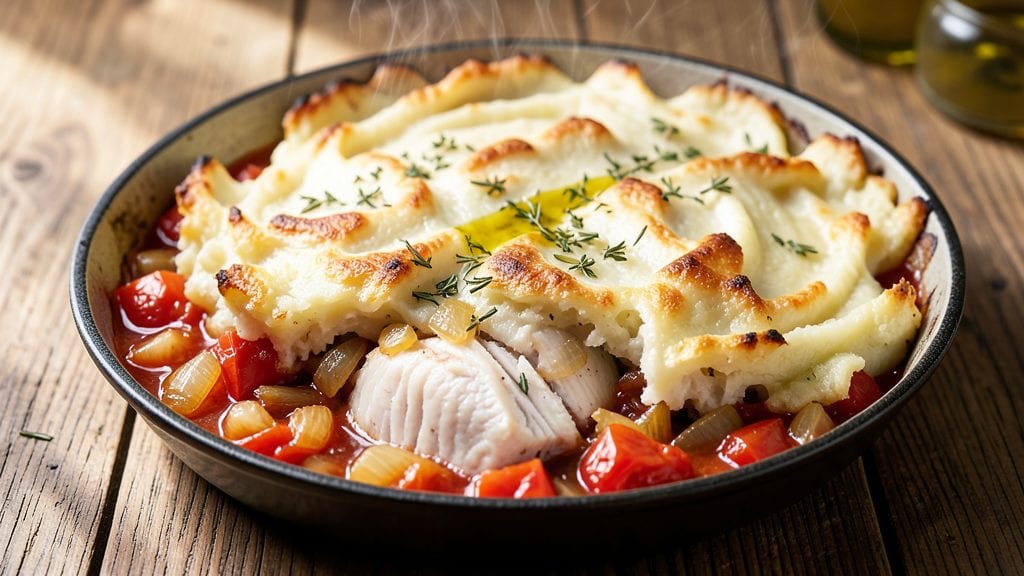
This fish shepherd's pie recipe turns classic comfort food into a lighter yet equally satisfying dish, perfect for pescatarian diets or anyone craving hearty flavors without heavy meat.
The secret lies in baking delicate white fish in a rich onion-tomato sauce, then crowning it with golden, crispy mashed potatoes that create a satisfying contrast between tender filling and crispy top.
I developed this recipe after realizing traditional versions could easily accommodate fish, delivering the same comforting experience with a seafood twist.
What sets this recipe apart is the balance of techniques: poaching the fish gently preserves its texture while absorbing the savory sauce, and the potato topping achieves that perfect crispy crust through careful baking.
The dish comes together in layers—first the flavorful base, then the creamy potato crown—making it ideal for meal prep or special occasions where presentation matters. Every bite delivers both richness and lightness, proving that fish can be just as comforting as meat.
This version works beautifully with cod, haddock, or halibut, though you could also experiment with smoked haddock for added depth. The filling stays moist thanks to the fish's natural juices, while the potato topping develops a golden, crackly exterior that's impossible to resist.
It's the kind of dish that feels indulgent yet remains balanced, perfect for family dinners or cozy weeknight suppers.
For those who prefer a more traditional approach, swapping the fish for diced lamb or beef works just as well—though the seafood version keeps it lighter. The recipe scales easily too, making it great for leftovers or feeding a crowd.
Let's get started on this comforting, versatile dish that proves comfort food can be reinvented.
Ingredients for fish shepherd's pie
Pantry staples meet seafood magic for this comforting yet light dish.
| Ingredient | Amount | Notes |
|---|---|---|
| White Fish Fillets 🐟 | 1 ½ lb | Cod, haddock, or halibut preferred |
| Yellow Onions 🧅 | 1 whole | Medium size, diced finely |
| Garlic Cloves 🧄 | 4 cloves | Freshly minced for aroma |
| Tomato Paste 🍅 | ½ cup | Smooth, not chunky |
| Diced Tomatoes 🍅 | 1 can | 14.5 oz, no salt added |
| Vegetable Broth 💧 | 1 cup | Low-sodium preferred |
| Russet Potatoes 🥔 | 2 lbs | Yukon gold works too |
| Milk 🥛 | ½ cup | Whole milk for creaminess |
| Unsalted Butter 🧈 | 4 tbsp | Cold for flaky layers |
| Heavy Cream 🥛 | ¼ cup | Full-fat for richness |
| Dried Thyme 🌿 | 1 tsp | Or 1 tbsp fresh thyme |
| Salt 🧂 | 1 ½ tsp | Kosher or sea salt |
| Black Pepper 🌶️ | ½ tsp | Freshly ground preferred |
| Extra-Virgin Olive Oil 🫒 | 1 tbsp | For crispy potato topping |
| Parmesan Cheese 🧀 | ¼ cup | Freshly grated, optional |
The fish is the star—cod or haddock holds up best to the rich sauce, but halibut works too. Whole Foods or Trader Joe's usually carry pre-cut fillets, but check the frozen section if you're in a pinch. Look for fillets that are bright white and firm to the touch—none of that fishy smell. The onions? Yellow or red both work, but yellow gives that classic shepherd's pie depth. Don't skip the diced tomatoes—Muir Glen or Hunt's are my go-tos for consistent quality. For the broth, low-sodium is key since we're adding our own salt later.
No cod? Pollock or tilapia are solid swaps, though they'll be slightly less flavorful. Fresh thyme out of stock? Dried works at one-third the amount, but toast it in a dry pan for 30 seconds first to wake up the flavor. The tomato paste can be the squeeze-tube kind from Trader Joe's—it's perfect for small batches and lasts forever. For the potatoes, Russets are ideal (they're starchy and fluffy), but Yukon Golds add a touch of sweetness. If you're in a rush, instant potatoes work in a pinch, though they won't be as creamy.
This dish tastes even better the next day—make extra and freeze portions for up to 3 months. For the crispiest topping, bake at 425°F and brush with olive oil before going under the broiler for 2 minutes at the end. Store leftovers in the fridge for 4-5 days, but reheat gently—microwaving makes the topping soggy. The filling stays moist thanks to the fish juices, so you won't have dry shepherd's pie here.
Why You'll Love This Recipe
- One-Pan Magic: I swear by this recipe when I’m too tired to scrub pots—just sauté onions and garlic, toss in fish and tomatoes, then top with mashed potatoes. The whole thing bakes together, and honestly? I’ve never had a messier cleanup.
- Garlic-Tomato Crunch: That combo of tomato paste and diced tomatoes with a splash of fish stock? It’s the secret—sweet, tangy, and just enough acidity to cut through the richness of the fish. My husband always asks for seconds, and I’ll be real: I don’t even mind when he does.
- Lunchbox Hero: Between us, this is my go-to for meal prep. Assemble it ahead, refrigerate, and bake later—perfect for busy mornings. The mashed potato topping reheats like a dream, and my kids actually eat their veggies (shhh, don’t tell them it’s hidden).
- Budget-Friendly Feast: White fish is cheaper than you think, and a single fillet stretches further than you’d expect when paired with onions and tomatoes. I’ve fed four people for under $15, and the leftovers? Just as good the next day—if there are any.
Step-by-step instructions for fish shepherd's pie recipe
Here's how to create a golden, crispy potato topping over a rich fish filling that's packed with flavor.
Prepare the Savory Fish Filling
Preheat your oven to 375°F and heat 1 tablespoon extra-virgin olive oil in a large oven-safe skillet over medium heat. Add the 1 whole yellow onions, diced finely, and sauté for 5 minutes until soft and translucent. I like to press down with a wooden spoon occasionally to help them caramelize.
Add the 4 cloves garlic cloves, minced, and cook for another 30 seconds until fragrant—don't let it brown or it'll turn bitter. Stir in the 0.5 cup tomato paste and cook for 2 minutes to deepen its flavor. Pour in the 1 can diced tomatoes and 1 cup vegetable broth, scraping up any browned bits from the bottom of the pan.
Bring the mixture to a gentle simmer, then reduce heat to low and add the 1.5 lb white fish fillets, breaking them into bite-sized pieces. Season with 1.5 teaspoons salt, 0.5 teaspoon black pepper, and 1 teaspoon dried thyme. Simmer gently for 8-10 minutes until the fish is just cooked through and flakes easily with a fork. Remove from heat and set aside.
Make the Creamy Potato Topping
While the fish filling simmers, peel and chop the 2 lbs russet potatoes into ½-inch cubes. Place them in a large pot, cover with cold water by about 1 inch, and add 1 teaspoon salt. Bring to a boil, then reduce heat and cook for 12-15 minutes until fork-tender. Drain well in a colander.
Return the potatoes to the pot and add the 0.5 cup milk, 0.25 cup heavy cream, and 4 tablespoons unsalted butter. Mash until smooth—you want a thick, lump-free consistency that holds its shape when spread. I like to use a potato masher for this step to keep some texture. Season with a pinch of salt and pepper if needed.
Transfer the mashed potatoes to a mixing bowl and fold in the 0.25 cup parmesan cheese until evenly distributed. The cheese adds a wonderful savory depth that pairs perfectly with the fish filling. Set aside while you prepare the final topping.
Create the Crispy Potato Crown
In a small bowl, mix together the remaining 1 tablespoon extra-virgin olive oil with 1 tablespoon milk to create a light binding mixture. Spread the fish filling evenly in the skillet you cooked it in, then spoon the mashed potato mixture on top, creating a smooth layer. Use a spatula to create gentle swirls in the surface for texture.
Pour the milk-oil mixture evenly over the top of the potatoes, then sprinkle with a pinch of salt and pepper. This step is crucial for achieving that perfect crispy crust. Bake for 25-30 minutes until the top is deep golden brown and crispy, and the filling is bubbling around the edges.
For the final touch, broil for 2-3 minutes until the top is even more golden and slightly blistered. Watch it closely—broilers can be intense! Remove from the oven and let rest for 5 minutes before serving. The filling will be hot and bubbly, while the potato topping will be crispy on top and creamy underneath.
Use a large spatula to carefully divide the shepherd's pie into 4 generous servings. The crispy potato crown should hold together beautifully, revealing the rich, flavorful fish filling beneath. For extra presentation, you can garnish with fresh parsley or a sprinkle of additional parmesan cheese. Serve immediately while the filling is hot and the potato topping is at its crispy best. The combination of the tender fish, savory tomato sauce, and creamy mashed potatoes topped with a golden crust creates a dish that's hearty yet elegant—perfect for a comforting family meal or an impressive dinner party dish.Serve and Enjoy
Pro Tips For Making Fish Shepherd'S Pie
- Sear the Onions First: I used to toss everything in the pan at once, and the onions would just sit there, barely cooking while the fish poached. Instead, cook the onions and garlic in a dry pan for 5 minutes on medium-high heat—just until they soften and start to caramelize. This builds flavor that won’t get lost in the sauce later.
- Pat the Fish Dry: Wet fish fillets steam instead of sear, and that’s a one-way ticket to soggy pie. Grab paper towels and press firmly—yes, even if you’re impatient like me—until they’re completely dry. A quick sear in the pan afterward keeps them tender but adds a crust that holds the filling together.
- Simmer the Sauce Low: After adding tomato paste and diced tomatoes, resist the urge to crank the heat. A gentle simmer for 10 minutes lets the flavors meld without breaking down the fish or making the sauce too watery. I learned this the hard way when my first batch turned into a mushy mess.
- Use Mashed Potato Tricks: Skip the butter-heavy mashed potatoes—mix in a splash of milk or cream, then fold in 2 tablespoons of sour cream or Greek yogurt. This keeps the topping light enough to crisp on top without weighing down the fish filling. (Yes, even if your recipe doesn’t mention it.)
Common mistakes when making this recipe
Overcooking Fish Filling
Fish cooks faster than you think—8-10 minutes max in the sauce is ideal. I’ve ruined this dish twice by letting it sit too long, turning flaky fillets into dry, rubbery chunks.
Watch for the edges to just start curling up, then pull it out immediately. A quick test: gently flake a piece with a fork—it should separate cleanly. 🐟
Skipping the Resting Step
After baking, always let the pie rest for 5 minutes before serving. This crucial pause lets the filling set and prevents a runny, messy first bite. I once cut into mine too soon and watched the filling ooze out like a sad, unstructured puddle.
The potato topping also needs time to firm up for that perfect crispy crust.
Uneven Potato Topping
Spread the mashed potatoes evenly in a smooth, thin layer—about ¼-inch thick—or they’ll bake unevenly. I’ve seen lumpy topping turn crispy in spots while staying raw underneath.
Use a spatula to create gentle swirls for texture, but keep the thickness consistent. A light mist of water before baking helps too, ensuring even browning.
Broiler Burns Too Fast
Broiling for the final crisp is risky—watch it like a hawk! I’ve charred the top in under 2 minutes, turning golden perfection into blackened disaster. If your oven runs hot, reduce broil time to 1-2 minutes and check every 30 seconds.
A light spray of olive oil on the topping before broiling helps too.
Using Wrong Potatoes
Russets are non-negotiable for that fluffy yet crispy texture. I tried Yukon Golds once for their sweetness, but they turned gluey under the broiler. Stick to starchy Russets—their high moisture content creates the perfect creamy base while the surface crisps beautifully.
If you must use waxy potatoes, add 1 extra tablespoon butter to compensate for their lower starch content.
Underseasoning the Filling
The fish sauce needs bold seasoning—don’t hold back! I’ve made the mistake of treating it like a delicate fish dish, only to end up with bland, forgettable filling. After the initial 1.5 tsp salt, taste and adjust—another ½ tsp often helps.
A pinch of smoked paprika or fresh herbs (like parsley) at the end elevates the flavor without overpowering.
Nutrition facts
Frequently asked questions
Can I make this with frozen fish instead of fresh?
Thaw frozen fish fillets overnight in the refrigerator, then pat them completely dry before adding to the sauce. The texture will be just as tender, but avoid using pre-cooked or breaded frozen fish—it won't hold up well in the rich tomato sauce.
How do I make this dish vegetarian?
Swap the fish for 1 lb mushrooms (cremini or portobello) sautéed with garlic and thyme, or use 1 can white beans (drained and rinsed) mixed with sautéed onions and tomatoes. The potato topping and gravy will still provide that comforting texture, just with plant-based protein.
Can I prepare this ahead of time?
Yes! Assemble the pie (without baking) up to 24 hours ahead and refrigerate. When ready to bake, add 10-15 minutes to the baking time. For the crispiest topping, broil for 3-4 minutes after baking. The filling stays moist, but the potato topping may need extra time to crisp.
What's the best way to reheat leftovers?
Reheat in a 350°F oven for 15-20 minutes until warmed through. The potato topping won't be as crispy, but it's still delicious! For extra crunch, broil for 2 minutes after reheating. Microwaving makes the topping soggy—never do that with this dish!
Can I use a different type of fish?
Cod, haddock, and halibut work best, but you can try pollock, tilapia, or mahi-mahi too. For stronger flavor, use smoked haddock or salmon (though salmon may overpower the tomato sauce). Avoid delicate fish like flounder—they'll fall apart too easily. The fish should hold its shape when gently flaked with a fork.