
Main Courses
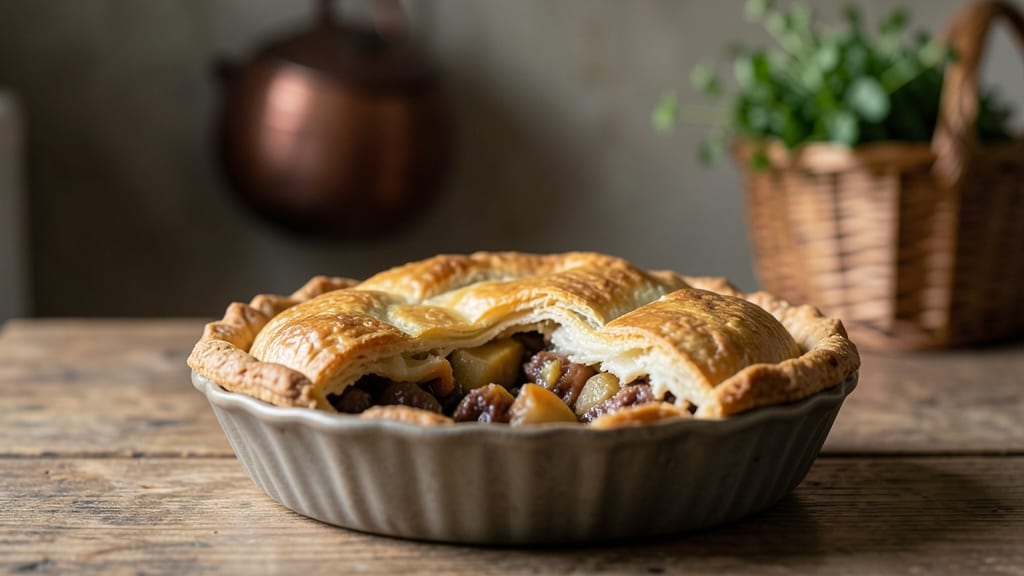
This English steak and kidney pie recipe delivers the comforting, hearty flavors of a classic British pub dish right to your kitchen table.
The secret to its success lies in a perfectly flaky pastry that encases tender beef, rich kidneys, and a deep, savory gravy—every bite is a taste of tradition. I first made this recipe during a chilly Portland winter when I craved something substantial enough to warm the soul.
The filling starts with quality cuts of beef and lamb kidneys, slow-cooked until fork-tender in a rich gravy infused with Worcestershire and red wine. Meanwhile, the pastry gets its signature flakiness from cold butter folded into the dough, creating those delicate layers that melt in your mouth.
This isn't just a pie—it's a masterpiece of British comfort food technique.
By the time it emerges from the oven, you'll have golden-brown pastry with crisp edges and tender centers, filled with perfectly seasoned meat swimming in luscious gravy.
The aroma alone will have everyone gathering around the table, and the first bite delivers that perfect balance of rich, savory, and slightly sweet flavors. This is the kind of dish that makes Sunday dinner feel like a celebration.
Serve it with creamy mashed potatoes or buttery peas to soak up every last drop of that delicious gravy. The leftovers reheat beautifully too, making this an ideal meal for feeding a crowd or enjoying over several nights.
Let's get started on creating this timeless British classic in your own kitchen.
Ingredients for english steak and kidney pie
Six ingredients for the filling, six for the pastry. Hearty, comforting, and full of British pub flair.
| Ingredient | Amount | Notes |
|---|---|---|
| Beef Chuck Roast 🥩 | 2 lb | Cut into 1-inch cubes |
| Lamb Kidneys 🍖 | 6 whole | Trimmed and cleaned |
| All-Purpose Flour 🌾 | 2 cups | For gravy thickening |
| Unsalted Butter 🧈 | ¾ cup | Cold, cubed for pastry |
| Red Wine 🍷 | ½ cup | Dry, like Cabernet Sauvignon |
| Worcestershire Sauce 🍯 | 2 tbsp | Original, not Lea & Perrins |
| Beef Stock 💧 | 1 ½ cups | Homemade or quality store-bought |
| Onion 🧅 | 1 whole | Yellow, diced |
| Garlic Cloves 🧄 | 4 cloves | Minced for filling |
| Thyme 🌿 | 1 tbsp | Fresh leaves, chopped |
| Bay Leaves 🍃 | 2 whole | Dried, for depth |
| Salt 🧂 | 1 ½ tsp | Kosher or sea salt |
| Black Pepper 🌶️ | 1 tsp | Freshly ground |
| Store-Bought Pie Crust 🥧 | 1 package | Or homemade, chilled |
| Egg 🥚 | 1 whole | For egg wash |
| Milk 🥛 | 1 tbsp | For egg wash |
The beef and kidneys are your stars—don't skimp. Chuck roast gives that melt-in-your-mouth texture, while lamb kidneys add richness. I grab mine from Whole Foods or my local butcher shop when they're on sale. Trim the kidneys carefully—they should be bright red inside, not gray. For the pastry, store-bought is fine if you're short on time, but homemade makes all the difference. If you go homemade, use cold butter (straight from the fridge) for that signature flakiness. The secret is keeping everything cold until you're ready to roll it out.
No red wine? Dry sherry or beef broth with a splash of balsamic works in a pinch. Worcestershire sauce is non-negotiable—it's what gives this dish its signature depth. Lea & Perrins is the classic choice, but if you can't find it, look for the original version. Fresh thyme is ideal, but dried works at half the amount. The pie crust can be homemade or store-bought—just make sure it's chilled before using. For extra richness, some people add a splash of brandy to the filling, but I've never found it necessary. The beef stock should be homemade if possible, but a quality store-bought version like Kitchen Basics works too.
This pie tastes even better the next day—trust me, I've tested it. Store leftovers covered in the fridge for up to 4 days, or freeze portions for 3 months. The pastry stays crispy when reheated, and the filling reheats beautifully. I like to portion it into individual servings before freezing so I can just pop one in the oven whenever I'm craving a taste of England. For serving, mashed potatoes or buttery peas are classic pairings—they soak up all that delicious gravy.
Why You'll Love This Recipe
- One-Pot Wonder: I swear by this recipe when I’m too tired to dirty three pans. The beef and kidneys simmer together in the same dish, then the pastry just folds over—no fuss, no stress. Honestly, the only prep is slicing the veggies and pouring the wine.
- Rich, Deep Flavor: That beefy, gamey kick from the kidneys? Chef’s kiss. The red wine cuts through the richness while the butter-rich pastry adds a buttery, golden finish—like a hug in pie form. (Yes, even on a Tuesday night.)
- Weeknight to Dinner Party: Make a double batch on Sunday and reheat for lazy nights, or impress guests with a rustic, hearty centerpiece. The pastry’s flaky crust and savory filling scream “fancy,” but it’s secretly my go-to for family dinners too.
- Leftover Goldmine: This pie actually tastes better the next day—crispier crust, deeper flavors. I freeze half for months, and it’s my secret weapon for quick, satisfying lunches. Budget-friendly? Absolutely. Reliable? You bet.
Step-by-step instructions for English steak and kidney pie
Here's how to create a showstopping pie with tender meat and golden pastry every time.
🍳 Step 1: Brown the Meat and Prepare the Filling
In a large Dutch oven, heat 2 tablespoons of the 0.75 cup unsalted butter over medium-high heat. Add the 2 lb beef chuck roast cut into 1-inch cubes and brown on all sides for about 8-10 minutes. You want deep color and caramelization—this builds flavor that'll shine through the gravy.
Remove the beef and set aside. In the same pot, add the 6 whole lamb kidneys (trimmed and cleaned) and cook for 2-3 minutes per side until lightly browned. They'll finish cooking later. Push the kidneys aside and add 1 whole onion (diced) and 4 cloves garlic cloves (minced). Sauté for 3-4 minutes until softened but not browned.
🍳 Step 2: Build the Rich Gravy Base
Pour in the 0.5 cup red wine and scrape up all the browned bits from the bottom of the pot. Let it simmer for 2-3 minutes until reduced by half. This deglazing captures all that meaty flavor you just created.
Add 2 tablespoons Worcestershire sauce, 1.5 cups beef stock, 1 tablespoon thyme, 2 whole bay leaves, 1.5 teaspoons salt, and 1 teaspoon black pepper. Stir well, then return the beef and kidneys to the pot. Bring to a simmer, cover, and cook for 1 hour until the beef is fork-tender.
🍳 Step 3: Thicken the Gravy Perfectly
Remove the beef and kidneys with a slotted spoon and set aside. Strain the cooking liquid through a fine-mesh sieve into a clean saucepan to remove any impurities. Return the liquid to medium heat and whisk in 2 cups all-purpose flour all at once. Cook for 3-4 minutes, whisking constantly, until the gravy thickens to a smooth, velvety consistency.
Taste and adjust seasoning if needed. The gravy should coat the back of a spoon and be rich but not gluey. Return the beef and kidneys to the gravy and stir gently to coat. Let the filling cool slightly—it should be hot but not boiling when you assemble the pie.
🥘 Step 4: Assemble with Flaky Layers
Preheat your oven to 375°F. Roll out the 1 package store-bought pie crust on a floured surface to fit your Dutch oven with about 1 inch overhang on all sides. Press it gently into the pot, tucking the edges up and over the rim.
Pour the hot filling into the crust, mounding it slightly in the center. Roll out the second pie crust and place it on top. Seal the edges by pressing them together firmly, then crimp with a fork or your fingers. Cut a few small slits in the top crust to allow steam to escape.
🔥 Step 5: Bake to Golden Perfection
Brush the top crust with a mixture of 1 whole egg beaten with 1 tablespoon milk. This egg wash is what creates that beautiful golden, flaky finish. Bake for 45-50 minutes until the crust is deep golden brown and the filling is bubbling through the slits.
For the last 10 minutes, place a baking sheet under the Dutch oven to catch any drips. This ensures a clean, crisp crust all around. Let the pie rest for 15 minutes before serving—this allows the filling to set slightly and makes slicing easier. The result should be a pie with a crisp, flaky crust and rich, savory filling that practically melts in your mouth.
Pro Tips For Making English Steak And Kidney Pie
- Sear the Chuck Hard: I learned this the hard way—skipping the deep sear means the beef stays tough even after slow cooking. Get that pan screaming hot, add a glug of oil, and let the chuck roast sit undisturbed for 5 minutes until it’s dark brown all over. That crust locks in flavor and keeps the meat tender.
- Trim Kidneys Like a Pro: Lamb kidneys have a bitter membrane—slice off the white fat and peel away the thin, papery skin before slicing them. Skip this, and you’ll end up with a dish that tastes like soap. Rinse them well under cold water afterward to remove any blood.
- Deglaze with Wine Early: After searing the meat, don’t rush the wine. Let it bubble away for 2-3 minutes until it’s reduced by half before adding stock. This concentrates the flavor and cuts through the richness of the kidneys—something I used to overlook, and the pie always tasted flat.
- Blind-Bake the Crust: Roll out the pastry, line the pie dish, and prick the base with a fork. Bake it empty at 200°C (400°F) for 10 minutes with a tray of boiling water underneath. This prevents a soggy bottom, and no one wants to eat a pie that’s basically a puddle. Trust me.
Storing and reheating your english steak and kidney pie
Fridge Storage Tips
Store your steak and kidney pie in an airtight container with the lid slightly loose to prevent condensation buildup. I use glass Pyrex containers because they keep the pie's aroma contained while allowing the filling to stay moist.
Keep it refrigerated at 40°F or below for up to 4 days—the flavors actually deepen overnight as the spices meld together. 🥧
Freezer Prep
For longer storage, wrap the pie tightly in plastic wrap followed by aluminum foil to prevent freezer burn. I like to portion it into individual servings before freezing so I can just pop one in the oven whenever I'm craving a taste of England.
Store in the freezer for up to 3 months—the pastry stays crispy when reheated properly. 💫
Oven Reheating
Preheat your oven to 350°F and place the pie on a baking sheet. Cover loosely with aluminum foil to prevent over-browning, then reheat for 20-25 minutes until heated through.
The foil helps retain moisture while the oven gently warms the filling. Remove the foil during the last 5 minutes to crisp the pastry. 🔥
Microwave Method
For a quick fix, transfer a single serving to a microwave-safe dish and cover with a damp paper towel. Heat on medium power (50%) for 2-3 minutes, then stir and continue in 30-second intervals until reaching 165°F.
Add a splash of beef stock if the filling looks dry—this restores the rich gravy consistency. ⚡
Leftovers Magic
This pie tastes even better the next day, honestly! I often make a double batch because the leftovers reheat beautifully. Serve with creamy mashed potatoes or buttery peas to soak up every last drop of that delicious gravy.
The contrast of warm pie with cool sides is pure comfort food perfection. 💛
Crust Refresh
If the pastry loses its crispness after reheating, brush it with a little melted butter and pop it under the broiler for 2-3 minutes until golden. This quick trick revives the texture without overcooking the filling.
I learned this trick from Mrs. Henderson back in Cincinnati—she always had a way to make leftovers taste fresh. 🥖
Nutrition facts
Frequently asked questions
Can I substitute beef with another protein?
While beef chuck roast is traditional, you can use lamb shoulder or venison for a gamey twist. Avoid pork—it won't brown properly and alters the flavor profile. For a vegetarian version, try mushrooms and lentils with extra Worcestershire for depth. The key is maintaining that rich, meaty base.
Why does my pastry turn soggy instead of flaky?
Soggy pastry usually means steam got trapped. Always cut venting slits in the top crust and avoid overfilling the pie. Chill the filling slightly before assembling too—hot filling creates excess steam. For extra insurance, brush the bottom crust with egg wash before adding filling to create a moisture barrier.
How do I know when the kidneys are cooked properly?
Kidneys should be lightly browned (2-3 minutes per side) when seared, then finish cooking in the gravy. They're done when they reach 160°F internally and are tender but not mushy. Overcooking makes them tough—remove them early if they're browning too quickly and let them finish in the gravy.
Can I make this pie ahead and refrigerate it?
This pie actually tastes better after resting. Assemble it completely (including egg wash) and refrigerate uncovered for 12 hours before baking. The cold start helps the crust crisp up perfectly. For a 24-hour head start, refrigerate the assembled pie (unbaked) for up to 2 days before baking.
What's the secret to that perfect gravy consistency?
The magic is in the roux—whisk in the flour all at once over medium heat and cook for exactly 3-4 minutes without stirring constantly. This creates a smooth, velvety texture. If it gets lumpy, strain it through a fine-mesh sieve. The gravy should coat the back of a spoon but still be pourable when hot.