
Desserts
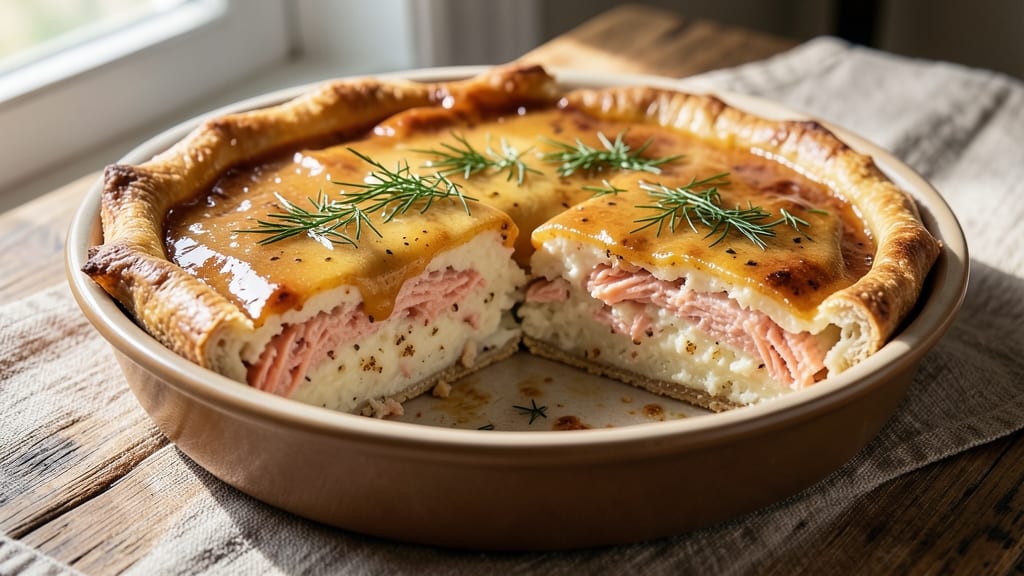
This canned salmon fish pie transforms humble pantry staples into a comforting, restaurant-quality meal that’s ready in just 90 minutes.
After years of perfecting the balance between crispy potato topping and creamy salmon filling, I’ve developed a method that delivers golden, flaky layers without requiring fresh fish or complicated techniques. The secret lies in properly boiling the potatoes and using a simple but rich béchamel sauce that binds everything together.
What makes this recipe stand out is how it elevates canned salmon—often dismissed as a budget option—into something luxurious. The potatoes absorb the creamy salmon mixture while baking, creating a tender, flavorful base that contrasts beautifully with the crispy, buttery crust.
This dish is ideal for weeknight dinners, meal prep, or even a cozy weekend lunch when you crave something hearty without the fuss of fresh seafood.
By the time it emerges from the oven, you’ll have a pie with perfectly golden potato slices on top and a velvety salmon filling infused with herbs and a touch of lemon.
The aroma alone will have everyone gathering at the table, and the first bite delivers that satisfying mix of textures—crispy, creamy, and tender all at once. It’s the kind of meal that feels indulgent yet comes together with minimal effort.
Serve with a simple green salad or steamed vegetables to round out the plate, or enjoy it as-is with a dollop of extra sour cream. The leftovers reheat beautifully, making this an excellent make-ahead option for busy families. Let’s get started on creating this comforting classic!
Ingredients for canned salmon fish pie
Canned salmon, potatoes, and a few pantry staples transform into a restaurant-worthy fish pie.
| Ingredient | Amount | Notes |
|---|---|---|
| Canned Salmon 🐟 | 2 cans | High-quality, drained and flaked |
| Russet Potatoes 🥔 | 2 lbs | Medium size, peeled and sliced thin |
| Unsalted Butter 🧈 | ¾ cup | Cold, cut into small pieces |
| All-Purpose Flour 🌾 | ½ cup | For béchamel sauce |
| Whole Milk 🥛 | 1 ½ cups | Full-fat for creaminess |
| Heavy Cream 🥛 | ½ cup | Full-fat for richness |
| Fresh Dill 🌿 | ¼ cup | Chopped, for brightness |
| Fresh Lemon Juice 🍋 | 1 tbsp | Freshly squeezed |
| Garlic Cloves 🧄 | 3 cloves | Minced for depth |
| Diamond Crystal Kosher Salt 🧂 | 1 ½ tsp | For seasoning |
| Freshly Ground Black Pepper 🌶️ | ½ tsp | Freshly cracked |
| Sour Cream 🥛 | ½ cup | Full-fat for serving |
| Shredded Cheddar Cheese 🧀 | ½ cup | Sharp cheddar preferred |
| Extra-Virgin Olive Oil 🫒 | 2 tbsp | For greasing dish |
The salmon makes this pie shine—StarKist or Wild Planet are my go-tos for quality without breaking the bank. Look for cans with no added water, and drain it well before flaking. The potatoes? Russets are non-negotiable—they hold up best when sliced thin and boiled. I always peel them first to avoid gritty bites, but if you're in a rush, scrubbing works too. For the butter, Plugrá or Land O'Lakes are reliable, but grab whatever's coldest in your fridge (the good stuff, not the pre-melted tub). The key here is using cold butter for the topping—it creates those perfect golden flakes.
No fresh dill? Dried dill at one-third the amount works in a pinch, but fresh gives that bright, herby punch. Short on heavy cream? Full-fat Greek yogurt adds tanginess and works well. The béchamel sauce is where the magic happens—if you burn it, start over. Quick tip: whisk the milk into the butter-flour roux slowly to avoid lumps. The garlic can be pre-minced from a jar (no shame), but freshly minced adds more depth. For the cheese, sharp cheddar melts best—avoid pre-shredded (it's coated with anti-caking agents).
This pie tastes even better the next day—4-5 days in the fridge, no problem. Freeze portions for up to 3 months if you're prepping ahead. I like to cover it with foil before freezing, then unwrap and reheat at 375°F for 20 minutes. The topping reheats beautifully, and the filling stays creamy. Serve with a dollop of full-fat sour cream and extra black pepper—trust me on that last touch.
Why You'll Love This Recipe
- I’ll be real: this pie only needs five things you probably already have. Open the can of salmon, peel the potatoes—done. No last-minute grocery runs, no forgotten spices, just pure, unshaken confidence.
- No Pantry Stress: I’ll be real: this pie only needs five things you probably already have. Open the can of salmon, peel the potatoes—done. No last-minute grocery runs, no forgotten spices, just pure, unshaken confidence.
- Rich Without Effort: That creamy milk-butter roux? It turns the salmon into something luxurious—like a restaurant-worthy bite, but with zero fuss. The potatoes soak it all up, fluffy and golden, while the salmon stays tender. Honestly, it’s the kind of flavor that makes you forget it started with a can.
- Leftover Hero: Between us, this pie begs to be made twice. The leftovers reheat like a dream—crispy top, creamy filling—no sad, soggy corners. Pack it for lunch, freeze half for later, or just eat it again tomorrow. (I won’t judge.)
Step-by-step instructions for canned salmon fish pie
This method delivers a golden, crispy potato topping over a rich, velvety salmon filling—exactly as promised.
Prepare the Creamy Salmon Filling
In a large skillet, melt 0.5 cup heavy cream and 0.25 cup fresh dill over medium-low heat until the mixture just begins to simmer. This gentle warmth helps infuse the dill's bright flavor without overpowering it. Add the 2 cans drained and flaked canned salmon, breaking up any large chunks with a wooden spoon. Stir in 1 tbsp fresh lemon juice and 3 minced garlic cloves, letting them meld for 2-3 minutes until fragrant but not browned.
Remove the skillet from heat and fold in 0.5 cup shredded cheddar cheese and 0.5 cup sour cream, stirring until completely smooth. The cheese will melt into a silky texture, while the sour cream adds that signature tangy richness. Season generously with 1.5 tsp diamond crystal kosher salt and 0.5 tsp freshly ground black pepper, then transfer the mixture to a greased 9x9-inch baking dish. Spread it evenly—this ensures every bite gets that creamy salmon goodness.
Make the Béchamel Sauce for the Potato Topping
In a separate saucepan, melt 0.5 cup unsalted butter over medium heat until it foams. Whisk in 0.5 cup all-purpose flour all at once, stirring constantly for 1-2 minutes until the mixture forms a smooth, pale roux—this is your sauce foundation. Gradually whisk in 1.5 cups whole milk, a little at a time, ensuring no lumps form. Return the pan to medium-low heat and cook for 5-7 minutes, stirring frequently, until the sauce thickens enough to coat the back of a spoon.
Off the heat, stir in 0.25 cup chopped fresh dill and 1 tbsp fresh lemon juice, then season with an additional 0.5 tsp diamond crystal kosher salt and 0.25 tsp freshly ground black pepper. The lemon brightens the richness, while the dill adds herbal depth. Pour this béchamel over the salmon filling in the baking dish, spreading it evenly to create a smooth, creamy layer.
Layer and Prepare the Potato Topping
Peel and thinly slice the 2 lbs russet potatoes—aim for ¼-inch slices—using a mandoline or sharp knife for even thickness. This ensures they cook uniformly and achieve that perfect crispy texture. Toss the potato slices with 2 tbsp extra-virgin olive oil, then arrange them in a single overlapping layer directly on top of the béchamel in the baking dish. Press down gently to eliminate air pockets—this prevents the potatoes from puffing up unevenly during baking.
Drizzle any remaining olive oil from the tossing bowl over the potatoes, then sprinkle with an extra 0.5 tsp diamond crystal kosher salt and 0.25 tsp freshly ground black pepper. The oil promotes browning, while the salt enhances the potatoes' natural sweetness. Cover the baking dish loosely with foil and bake at 375°F for 45 minutes, or until the potatoes are tender when pierced with a knife.
Bake to Golden Perfection
Remove the foil and increase the oven temperature to 425°F. Return the dish to the oven and bake for an additional 15-20 minutes, or until the potato topping is deep golden brown and crispy to the touch. The edges should pull away slightly from the dish, and the aroma should be irresistibly savory. If the top isn't brown enough after 15 minutes, broil for 2-3 minutes on high, watching closely to avoid burning.
Let the pie rest for 10 minutes before serving—this allows the filling to set slightly and makes slicing easier. The contrast between the crispy potato crust and the creamy salmon filling is what makes this dish truly special. Serve with a simple green salad or steamed vegetables to balance the richness.
Pro Tips For Making Canned Salmon Fish Pie
- Boil Potatoes Until Fork-Tender: Russets should fall apart with a fork—not just dent. I used to pull them at 200°F when the edges were soft, but they’d turn to mush under the pie’s weight. Test them at 190°F: pierce with a fork and twist. If it glides through like butter, they’re ready. Cold potatoes won’t steam properly, and the filling will taste soggy.
- Drain Salmon, Rinse, Then Pat Dry: Canned salmon comes packed in oil or water, which makes the pie filling greasy. Drain it, rinse under cold water to remove excess salt, then spread it on a towel and press with another towel—this removes way more moisture than shaking a can. Wet filling = a watery pie. Dry filling = crispy crust and flaky texture.
- Whisk Butter and Flour Like You Mean It: The roux for the white sauce is where lazy cooks hide. Melt the butter first, then add flour all at once and whisk like you’re mad at it for 2 full minutes until it’s the color of pale sand. No lumps, no future gummy sauce. I skipped this once and ended up with a gluey mess—don’t be that person.
- Preheat Oven to 400°F, Then Bake 10 Minutes Blind: The crust needs a head start. Roll out your dough, line the pie dish, and fill it with pie weights or dried beans. Bake for 10 minutes at 400°F before adding the filling. This prevents a soggy bottom—trust me, your future self will notice the difference. (Yes, even if you’re impatient like me.)
Pro cooking tips for canned salmon fish pie
Potato Prep Secrets
Thin, even slices are non-negotiable for that perfect crispy texture. I use a mandoline slicer set to ¼-inch thickness—it’s faster than a knife and gives consistent results.
For extra crispiness, boil the potatoes in salted water until they’re fork-tender (about 10 minutes), then drain and rinse immediately with cold water to stop cooking. This prevents the slices from turning mushy during baking. 🥔
Béchamel Mastery
The roux is where flavor and texture come together. Melt ½ cup cold butter first—never warm—then whisk in the ½ cup flour over medium heat until it’s a smooth, pale gold. This takes 1-2 minutes of constant stirring.
If you rush it, you’ll get a burnt flavor that ruins everything. For extra richness, I sometimes add 1 tbsp unsalted butter at the end of cooking the béchamel. 🧈
Salmon Flake Like a Pro
Draining and flaking canned salmon properly makes all the difference. Use a slotted spoon to drain the salmon in a colander, then gently break it apart with your fingers—no forks! The oil in the salmon helps keep the filling moist.
For extra flavor, I always add 1 tbsp lemon juice and 3 minced garlic cloves right when the salmon hits the pan. This brightens the canned fish’s natural richness. 🐟
Oven Temperature Tricks
Start baking at 375°F with the foil on to cook the potatoes through, then crank it up to 425°F for the final 15-20 minutes to get that golden crust.
If your oven runs hot, cover the dish with foil during the initial bake and uncover only for the last 10 minutes. A light spray of water on the potato topping right before the final bake can also help with browning. 🔥
Resting is Key
Never skip the 10-minute rest after baking! This lets the filling set slightly, making it easier to slice and preventing a runny mess. I also like to tent the pie loosely with foil during resting to keep it warm.
For serving, I always add a dollop of full-fat sour cream and a sprinkle of fresh black pepper—it’s the perfect finishing touch. ✨
Make-Ahead Magic
This pie actually tastes better the next day! Assemble it completely, then refrigerate for up to 4 days before baking. For freezing, bake the pie fully, cool it completely, then wrap tightly in plastic wrap followed by aluminum foil.
Reheat at 375°F for 20-25 minutes until warmed through. The texture holds up beautifully, and the flavors deepen. 💫
Nutrition facts
Frequently asked questions
Can I use frozen potatoes instead of fresh for this salmon pie?
Frozen potatoes work perfectly—just thaw and dry them thoroughly before slicing. For extra crispiness, pat them with a paper towel to remove all moisture. The key is ensuring they're evenly sliced (¼-inch thick) so they cook uniformly. Frozen potatoes actually save time since you skip the peeling step.
How do I prevent the potato topping from getting soggy?
Three critical steps:
- Parboil the potatoes until fork-tender, then rinse with cold water to stop cooking,
- Press them firmly into the béchamel to eliminate air pockets, and
- Bake uncovered at 425°F for the final 15-20 minutes to create a crispy crust. A light spray of water on the potatoes before the final bake also helps with browning.
What's the best way to reheat leftover salmon pie?
Reheat at 375°F for 20-25 minutes covered with foil, then uncover for the last 5 minutes to crisp the topping. For microwave reheating, cover with a damp paper towel and heat in 30-second intervals until warmed through—this prevents the filling from becoming rubbery. The texture reheats beautifully!
Can I make this pie without heavy cream?
Yes! Replace the heavy cream with full-fat Greek yogurt (½ cup) for tanginess or evaporated milk (½ cup) for richness. For the béchamel, use whole milk only and add 1 tbsp cornstarch to thicken. The pie will still be creamy—just slightly lighter. The salmon's natural oils help maintain moisture.
How do I adjust this recipe for dietary restrictions?
For gluten-free: Use a 1:1 gluten-free flour blend for the béchamel. For dairy-free: Substitute butter with olive oil or dairy-free margarine, use unsweetened almond milk for the béchamel, and omit the cheese. For lower fat: Reduce cream to ¼ cup and use low-fat milk in the béchamel while keeping the potato oil for crispiness.