
Main Courses
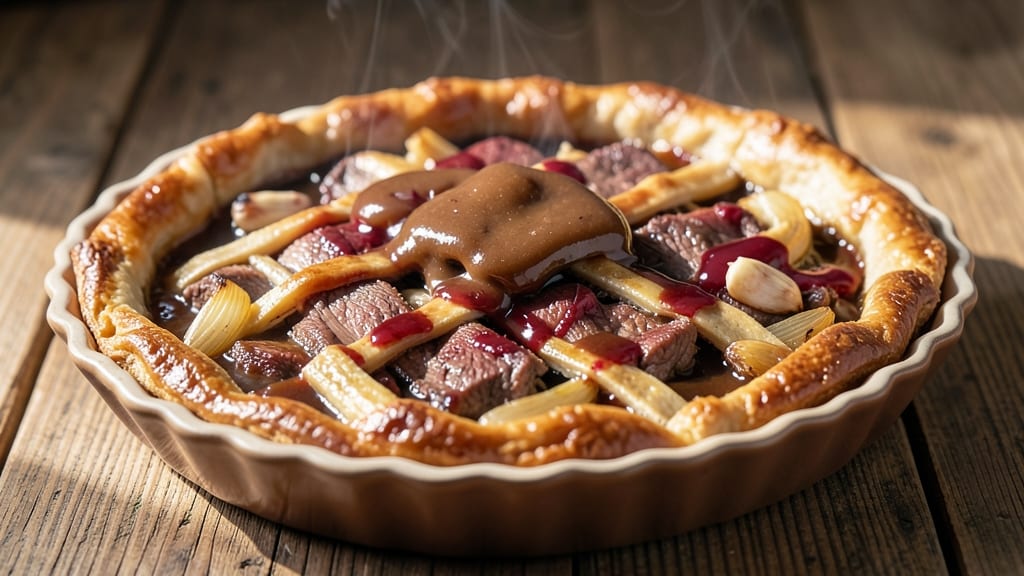
This beef cheek and bone marrow pie delivers restaurant-quality richness with every bite—where tender, gelatinous meat meets a golden, flaky crust. The secret lies in slow-braising beef cheek until it melts into luxurious silk, then enriching it with bone marrow for unmatched depth.
I perfected this technique after years of experimenting with traditional French methods, balancing time-honored pastry craft with modern shortcuts like pre-made crusts for busy cooks.
The filling transforms tough beef cheek into melt-in-your-mouth perfection through precise braising, while the marrow adds a velvety, umami-rich layer that elevates the pie to showstopper status.
For the crust, you can choose between a classic puff pastry for crispy layers or a homemade pie dough for that rustic charm—both methods yield impressive results with minimal fuss. This dish isn’t just a meal; it’s an experience that turns ordinary dinners into memorable occasions.
What makes this recipe truly special is the contrast of textures: the crisp, buttery crust gives way to the tender, almost jiggly beef and the luxurious marrow that coats every bite. The umami flavors develop deeply during the slow cooking process, creating a dish that’s rich yet balanced.
Whether you’re serving it at a holiday gathering or a cozy weeknight dinner, this pie will leave your guests asking for seconds.
Pair it with a crisp red wine and simple roasted vegetables to let the pie shine as the star of the meal. The leftovers? Even better the next day as the flavors meld further. Let’s get started on creating this luxurious centerpiece for your table.
Ingredients for beef cheek and bone marrow pie
Six ingredients transform tough beef cheek into melt-in-your-mouth luxury—where slow-braised richness meets golden crust perfection.
| Ingredient | Amount | Notes |
|---|---|---|
| Beef Cheek 🥩 | 2 ½ lb | Tough cut, trimmed of excess fat |
| Bone Marrow 🦴 | 1 cup | Fresh, from beef shin bones |
| Yellow Onion 🧅 | 1 whole | Yellow or red, finely diced |
| Garlic Cloves 🧄 | 6 cloves | Fresh, peeled and smashed |
| Red Wine 🍷 | 1 cup | Dry, like Cabernet Sauvignon |
| Beef Stock 🥫 | 2 cups | Homemade or high-quality store-bought |
| Tomato Paste 🍅 | 2 tbsp | Smooth, not chunky |
| Thyme 🌿 | 1 tbsp | Fresh, stems removed |
| Bay Leaves 🍃 | 2 whole | Fresh if possible |
| Black Peppercorns 🌶️ | 1 tsp | Freshly cracked |
| Salt 🧂 | 1 ½ tsp | Diamond Crystal kosher salt |
| Unsalted Butter 🧈 | ½ cup | Cold, cubed for crust |
| All-Purpose Flour 🌾 | 2 ½ cups | For homemade crust |
| Ice Water ❄️ | ½ cup | For pie dough |
| Puff Pastry 🥧 | 1 sheet | Store-bought for shortcut |
| Egg 🥚 | 1 whole | For egg wash |
The beef cheek is non-negotiable—look for cuts with good marbling at your local butcher shop or Whole Foods meat counter. Costco often carries vacuum-sealed beef cheek in bulk, which saves time and money. Bone marrow is trickier to find; ask your butcher for beef shin bones and have them crack them open for you. The marrow should be a deep, creamy yellow—anything grayish means it’s old. For the crust, I recommend Pepperidge Farm puff pastry for ease, but if you’re ambitious, homemade pie dough gives that rustic charm. The butter in the crust should be European-style—it has higher fat content for flakier layers.
No beef cheek? Short ribs or brisket work in a pinch, but the texture won’t be as luxurious. Can’t find bone marrow? Duck fat or extra butter adds richness, though it won’t have the same depth. Fresh thyme is ideal, but dried works at half the amount. For the red wine, anything bold like Cabernet or Merlot will do—just avoid sweet varieties. The tomato paste can be from a tube or a can; Trader Joe’s has great single-serve tubes that cut down on waste. If you’re short on time, pre-made pie crust is a game-changer, but homemade tastes like love.
This pie tastes even better the next day as the flavors meld. Store leftovers in the fridge for up to 4 days, covered tightly. For longer storage, freeze portions for up to 3 months. The crust stays crispy when reheated—just pop it in a 350°F oven for 10-15 minutes. The filling can be prepped ahead and baked later, making this a perfect make-ahead dish for holidays. If you’re serving a crowd, double the crust recipe—it’s worth the extra effort.
Why You'll Love This Recipe
- Here’s the secret: beef cheek and marrow are cheap cuts that taste like a splurge. A single pie feeds four, and the ingredients stretch further than you’d think. I’ve made this for date nights, family dinners, and even potlucks—no one ever guesses it’s budget-friendly.
- Foolproof Simplicity: I swear by this recipe because it’s the kind of dish that forgives mistakes. The beef cheek practically melts itself—just sear it, slow-cook it, and let the red wine and onions do the work while you prep the marrow. No fancy techniques, just hands-off richness.
- Rich Without Effort: That first bite? Pure indulgence. The marrow turns golden and buttery, the beef cheek falls apart like it’s been braising for hours (even though it’s not), and the wine cuts through the richness like a sigh of satisfaction. It’s the kind of flavor that makes you slow down.
- Leftover Luxury: Make one pie, and you’ll have leftovers for days. The filling reheats beautifully—better the second time, honestly—and the crust stays crisp. Pack it for lunch or serve it cold with crusty bread. It’s my go-to when I need a meal that feels special but doesn’t require a holiday.
Step-by-step instructions for beef cheek and bone marrow pie
Here's how to transform tough beef cheek into velvety filling and bone marrow into a decadent crust.
Render Bone Marrow and Cook the Beef Cheek
Preheat your oven to 325°F. Cut the 1 cup bone marrow in half lengthwise and place both halves in a small oven-safe skillet. Roast for 15-20 minutes until the marrow melts completely and turns golden. Remove from oven and let cool slightly—this rendered marrow will form our luxurious crust.
While the marrow roasts, trim any excess fat from the 2.5 lb beef cheek and cut it into 1-inch cubes. In a large Dutch oven, combine the beef cheek with 1 whole yellow onion (finely diced), 6 cloves garlic cloves (smashed), 2 tbsp tomato paste, 1 tbsp thyme, 2 whole bay leaves, 1 tsp black peppercorns, and 1.5 tsp salt. Pour in 1 cup red wine and 2 cups beef stock, stirring to combine. Bring to a simmer over medium-high heat.
Slow-Braise the Beef Cheek Until Tender
Cover the Dutch oven and transfer to the preheated 325°F oven. Braise for 3-4 hours until the beef cheek is fork-tender and easily pulls apart. You'll know it's ready when the meat shreds cleanly and the sauce has reduced to a rich, glossy consistency. If the liquid reduces too quickly, add 2-3 tablespoons of water to maintain moisture.
Remove the beef cheek and strain the braising liquid through a fine-mesh sieve into a clean bowl. Discard the solids. The strained liquid should yield about 2 cups of deeply flavorful reduction—this is the heart of our filling. Shred the beef cheek using two forks and return it to the strained liquid, mixing well to combine.
Prepare the Homemade Crust
In a large bowl, combine 2.5 cups all-purpose flour, 1.5 tsp salt, and ½ cup cold unsalted butter (cubed). Use a pastry cutter or your fingers to work the butter into the flour until the mixture resembles coarse crumbs with pea-sized butter pieces. Gradually add ½ cup ice water, one tablespoon at a time, mixing gently until the dough just comes together. Avoid overworking it.
Divide the dough into two equal portions and flatten each into a ¼-inch thick disk. Wrap each in plastic wrap and chill for 30 minutes. Meanwhile, roll out one disk to fit the bottom of a 9-inch pie dish, leaving a ½-inch overhang on all sides. Trim the excess and crimp the edges with a fork or your fingers. Prick the bottom with a fork to prevent puffing.
Assemble and Bake the Pie
Preheat your oven to 375°F. Spread the shredded beef cheek mixture evenly into the prepared pie crust, leaving a ½-inch border at the edges. In a small bowl, whisk together the melted bone marrow with 1 whole egg to create an egg wash. Brush this mixture generously over the top crust and edges of the pie.
Roll out the second dough disk to fit the top of the pie, leaving a ½-inch overhang. Place it over the filling and seal the edges by pressing them together with your fingers or a fork. Cut a few slits in the top crust to allow steam to escape. Brush the top crust with additional egg wash. Bake for 45-50 minutes until the crust is golden brown and the filling is bubbling through the slits.
Finish with Puff Pastry and Serve
While the pie bakes, roll out the 1 sheet puff pastry to ⅛-inch thickness. Cut into strips about 1-inch wide and place them decoratively on top of the pie, pressing the edges lightly to adhere. Return the pie to the oven for an additional 10-15 minutes until the puff pastry is golden and crisp.
Let the pie rest for 15 minutes before slicing to allow the filling to set slightly. Serve warm, with each slice revealing layers of tender beef cheek, rich marrow-infused crust, and delicate puff pastry. The contrast between the silky filling and crisp pastry makes every bite unforgettable.
Pro Tips For Making Beef Cheek And Bone Marrow Pie
- SCORE THE CHEEK: Use a sharp knife to cut the beef cheek into 1-inch cubes—don’t just tear it. The clean edges render fat more evenly and keep the texture consistent. (I learned this the hard way when my first batch turned into a mushy, uneven mess.)
- ROAST MARROW UNTIL GOLD: Spread the bone marrow on a tray and roast it at 400°F (200°C) for 10-12 minutes until it’s golden and crackly. Cold marrow straight from the fridge won’t melt as smoothly into the pie filling—this step makes all the difference.
- DEGLAZE WITH RED WINE: Let the onions and garlic caramelize until deep brown before pouring in the red wine. The wine should sizzle and reduce by half—this builds flavor. Skipping this step leaves the sauce thin and one-dimensional.
- BAKE COVERED THEN UNCOVERED: Cover the pie with foil for the first 45 minutes to steam the filling, then uncover for the last 15 to let the crust brown. The uncovered finish gives you that rich, caramelized crust without a soggy bottom. (Yes, even if you’re impatient like me.)
Health benefits of this recipe
Protein Powerhouse
Beef cheek is a lean yet protein-rich cut, delivering about 40 grams of high-quality protein per 3-ounce serving after slow cooking. This makes it ideal for muscle repair and satiety—perfect for post-workout meals or hearty dinners.
The bone marrow adds another layer of nutrition with concentrated fat-soluble vitamins like A, D, E, and K2, which support immune function and bone health. 💪
Iron and Zinc Boost
This dish is packed with heme iron from the beef cheek, crucial for oxygen transport in your blood. A single serving provides over 30% of your daily iron needs, helping prevent fatigue and anemia.
The zinc content supports immune function and wound healing, while the marrow contributes vitamin K2, which plays a key role in calcium metabolism and heart health.
Healthy Fats for Balance
While rich in fats, the monounsaturated and polyunsaturated fats in bone marrow and beef cheek support heart health when consumed in moderation. These fats help reduce LDL cholesterol while maintaining HDL levels.
The slow-cooking process actually makes the fats more digestible, unlike raw or poorly cooked fatty meats. I recommend serving this pie 1-2 times per month as part of a balanced diet.
Collagen-Rich Texture
The slow braising process breaks down collagen in the beef cheek, creating a gelatinous texture that’s gentle on digestion. Collagen supports joint health and skin elasticity, making this pie surprisingly beneficial for your connective tissues.
The marrow’s natural gelatin content further enhances this effect, offering a unique combination of protein and joint-supporting nutrients.
Umami Flavor Benefits
The deep umami flavors come from glutamates in the beef and bone marrow, which can actually help regulate appetite and improve digestion. Studies show umami-rich foods may enhance nutrient absorption, making this pie not just delicious but also functionally beneficial for your body.
The red wine and thyme in the recipe add to this flavor profile while providing antioxidants. ✨
Meal Satisfaction
This pie delivers high satiety thanks to its protein and fat combination, helping curb cravings between meals. The fiber from the crust (especially with whole wheat flour) adds to this effect.
I find that a single slice keeps me full for 3-4 hours, making it perfect for busy weeknights when you need a substantial yet satisfying meal without heavy carbs.
Nutrition facts
Frequently asked questions
Can I substitute beef cheek with another cut of meat?
The best substitutes are short ribs or brisket—both have similar fat content and slow-cook well. However, the texture won't be as luxurious since these cuts don't break down into the same gelatinous perfection. For a closer result, use chuck roast (trimmed of fat) and braise for 4-5 hours instead of 3-4. Avoid lean cuts like sirloin—they'll dry out.
How do I find fresh bone marrow if my butcher doesn't carry it?
Ask for beef shin bones and have your butcher crack them open for you. If that's not possible, duck fat or extra butter can add richness to the crust, though it won't replicate the marrow's depth. For a budget-friendly alternative, use beef bone broth (reduced by half) mixed with 2 tablespoons of butter as a crust wash.
Can I make this pie ahead of time?
This pie tastes even better the next day! Assemble it completely (including the top crust) and refrigerate for up to 24 hours before baking. For longer prep, make the filling 2 days ahead and refrigerate it—reheat gently before assembling. Leftovers keep well in the fridge for 4 days or frozen for 3 months. Reheat slices at 350°F for 10-15 minutes to restore crispness.
What's the secret to a flaky crust with bone marrow?
The key is using cold butter and ice water in the dough, plus the marrow's high fat content. Chill the dough for at least 30 minutes before rolling, and don't overwork it. For extra flakiness, fold the dough 2-3 times while chilling (like puff pastry). Brush the crust with the melted marrow-egg wash before baking—this creates steam that separates the layers beautifully.
Is this pie suitable for a vegetarian diet?
Unfortunately, no—the beef cheek and bone marrow are essential for the dish's signature texture and flavor. However, you could create a vegetarian version using mushrooms (like portobello or shiitake) braised with vegetable stock, nutritional yeast for umami, and a cashew cream crust. The result would be completely different but still hearty and satisfying.